When Resolution Becomes the Price, Who Defines the Outcome?
New service AI packaging, customer deployment evidence, omnichannel updates, and overlapping AI outages reveal why paying for resolution requires stronger measurement and operational controls.
Salesforce outcome based pricing, 8x8 AI adoption, Amazon Connect resiliency, Cisco analytics, Google CCaaS 6.9, Genesys voice risk, Talkdesk analytics, and overlapping AI provider outages show why resolution needs operational proof.
Key Takeaways
- Salesforce is packaging autonomous service, human assistance, analytics, security, collaboration, and workforce capabilities into new Agentforce Service editions.
- Outcome based pricing makes autonomous resolution a billable unit, increasing the need for a clear and auditable definition of resolution.
- New customer examples show that data unification, process redesign, and employee adoption often precede measurable AI value.
- 8x8's open-beta AI Studio growth is an adoption signal, not proof of durable resolution.
- Amazon Connect and Cisco released material cross-region routing, transcript, and customer-level analytics capabilities.
- Genesys and Talkdesk updates show why voice configuration and analytics transitions belong in operational planning.
- Google Cloud CCaaS 6.9 brings email into its agent desktop while correcting defects that could affect callbacks, CRM records, recordings, and channel operations.
- Overlapping outages at major AI providers demonstrate why contact centers need model dependency maps, degraded modes, and human fallback.
- The Ownership Gap appears when one system records a resolution but the customer, employee, or another department still carries unfinished work.
From Activity Based AI to Outcome Based AI
Customer service technology has traditionally been priced through licenses, seats, usage, messages, minutes, or consumption credits.
Salesforce is now putting resolution more directly into the commercial model.
That sounds aligned with what customer service leaders have wanted for years: pay for a completed result instead of another unit of activity.
But it creates a harder question.
This week's developments show why the answer cannot come from one interaction, one platform, or one vendor metric.
1. Resolution Is Becoming a Commercial Unit

On September 3, Salesforce announced new Core, Advanced, and Max editions for Agentforce Service. The editions bundle AI, Slack, analytics, data security, and support. Max also includes Agentforce Workforce Engagement and Service Rep Assistant capabilities.
Salesforce lists Core at $195, Advanced at $395, and Max at $550 per user per month, while noting that pricing and availability can vary. Advanced and Max include Agentforce Help Agent, which uses outcome based pricing.
Source: Salesforce new editions and pricing
Salesforce says customers pay when the Help Agent resolves an issue autonomously from start to finish. It says there is no resolution charge when the customer asks for a person or provides negative feedback. The Help Agent and this pricing model have been generally available since July 2026, according to Salesforce.
Source: Salesforce Agentforce Help Agent pricing and availability
This is a meaningful market development. Resolution is moving beyond an operating metric and becoming a billable event.
What This Means
Outcome based pricing can align vendor and customer incentives better than paying for messages or automation volume.
It can also create a new measurement gap.
A conversation may end without an escalation while the customer remains unresolved. An answer may appear correct but create a downstream error. The customer may return later, reopen the case, call another channel, dispute the action, or require an employee to repair the record.
Before buying by resolution, leaders should define:
- The customer need that must be completed
- The event that marks completion
- The window for repeat contact or reopening
- Treatment of delayed failures and reversals
- Whether downstream correction invalidates the resolution
- How partial resolutions are handled
- Who audits disputed charges
- Which system is the authoritative record
- How customer effort and satisfaction are considered
Paying for resolution is progress only if the organization measures durable resolution rather than convenient closure.
2. Deployment Evidence Shows That AI Value Starts Before the AI
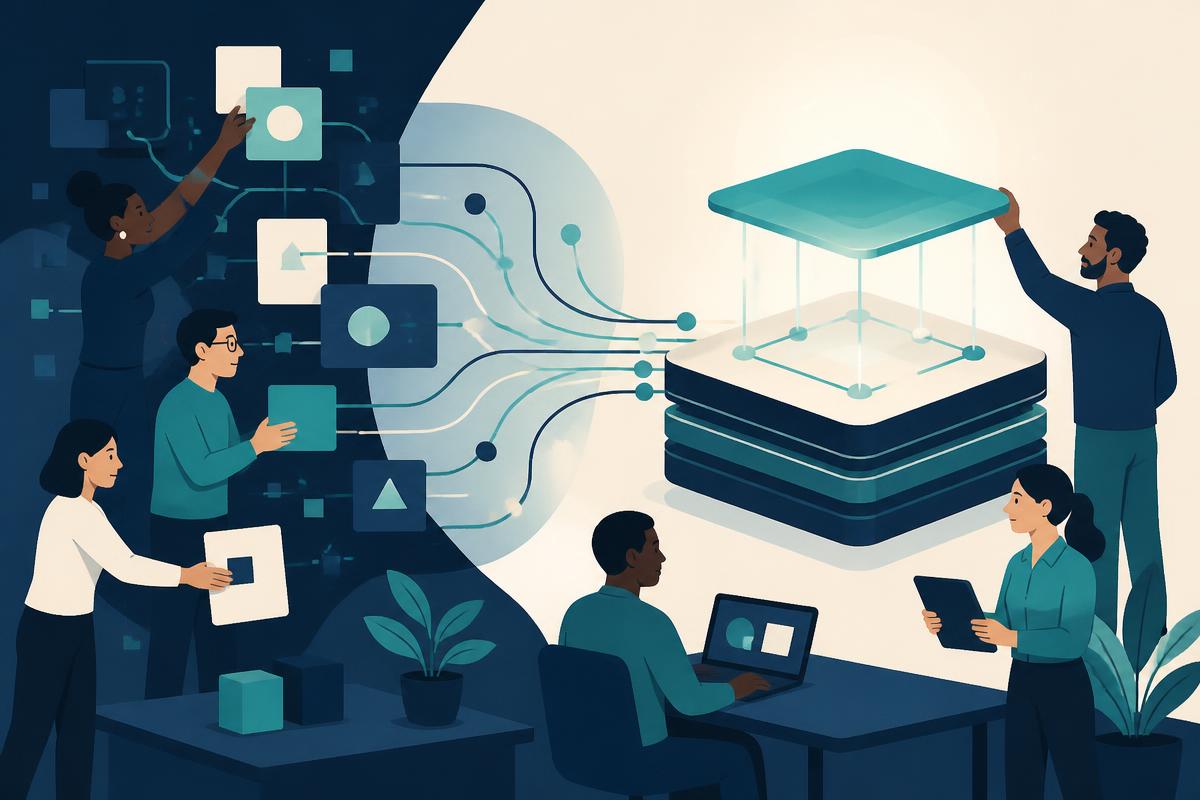
Salesforce published new customer examples on September 2. They are vendor selected and not independently verified, but the operational details are useful.
Tottenham Hotspur unified more than 4.6 million fan profiles across 30 systems before applying AI to ticketing, membership, and stadium questions. Salesforce reports that human agents can resolve some handed off inquiries in 10 seconds or less and that the organization saved 80,000 minutes during the first month.
The Grout Guy replaced paper planners and spreadsheets with connected digital workflows. It then deployed multiple agents for work orders, lead intake, and image assisted quoting. Salesforce reports that quotes now take about 20 minutes instead of three to five days and that the business increased the number of technicians supported by each administrator.
Sammons Financial combined expanded AI service hours with human oversight and employee communication. Salesforce says the AI handled more than 16,000 policy calls in six months and helped absorb seasonal peaks without temporary staffing or longer hold times.
Source: Salesforce customer deployment examples
What This Means
The AI did not create clean data, connected systems, digitized workflows, or employee trust by itself.
Those foundations came first.
The examples also leave important questions unanswered:
- What percentage of needs were durably resolved?
- How often did customers return?
- What correction or review work remained?
- Did customer effort improve?
- What was the full implementation and operating cost?
- How did employee workload and complexity change?
- Were the results sustained beyond the initial measurement period?
The results are promising. They should be treated as customer and vendor reported evidence, not universal proof.
The strongest AI use case often begins with a specific operational problem, not a general mandate to automate.
3. 8x8 Shows Adoption Momentum—With Important Qualifications

8x8 reported on August 27 that interactions powered by AI Studio had grown nearly 450% since April. It also announced channel unification, Caller Memory, Advisor, App Access, GDPR compliance, and HIPAA readiness.
Source: 8x8 AI Studio update
The update deserves inclusion because it shows an established CCaaS vendor expanding agent-building, memory, orchestration, and compliance capabilities.
It also requires precise labeling. AI Studio remains in open beta. The 450% figure is vendor-reported interaction growth—not a resolution rate, savings measure, or independent adoption study.
What This Means
Open-beta volume can show interest and product learning. It cannot answer whether the AI completed the work, reduced total demand, improved customer effort, or lowered cost after review and correction.
Caller Memory also raises questions about what is retained, how long it persists, whether customers can correct it, and how consent, identity, access, and deletion work.
Usage is evidence that a capability is being tried. It is not evidence that the customer's need was resolved.
4. Active-Active Resilience Is Becoming Operational
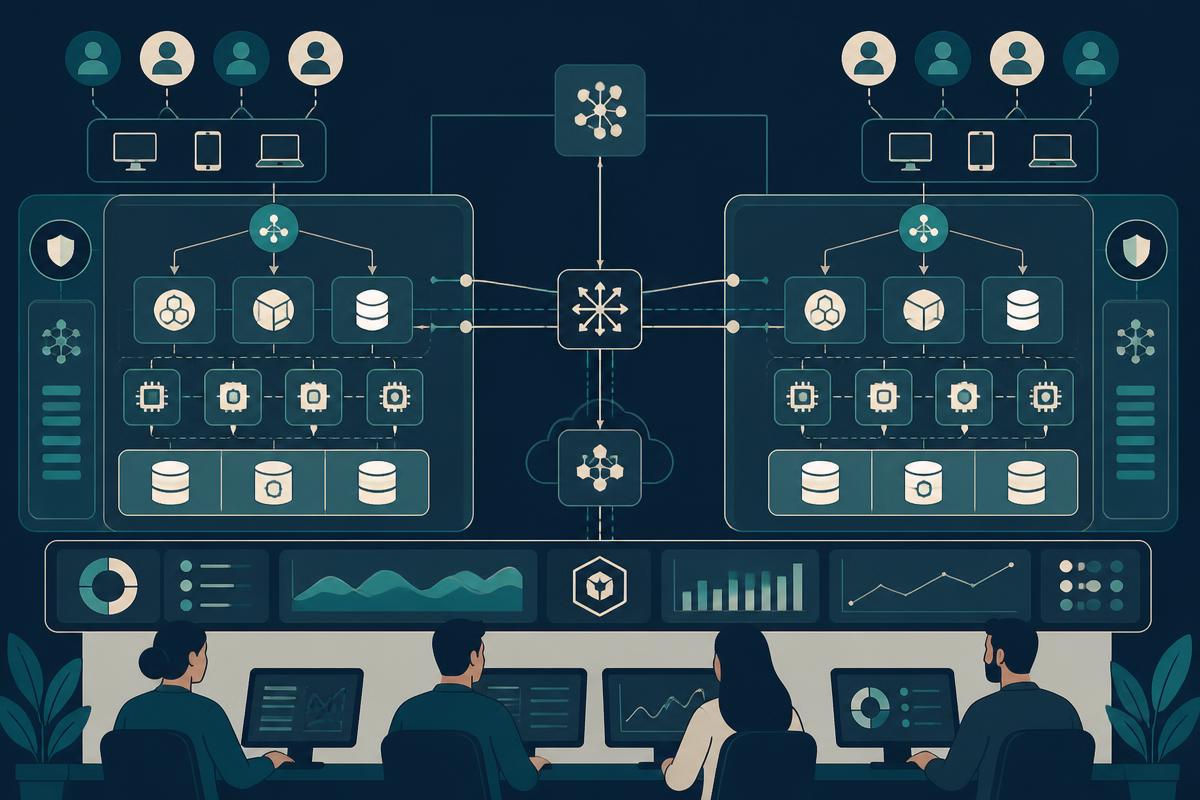
Amazon Connect says Global Resiliency can now route contacts to agents across paired active regions while managers use unified analytics and contact search. The feature set is enabled by default for new ACGR instances created on or after September 1; existing instances can request access.
Source: Amazon Connect release notes
What This Means
Live work through both regions can keep environments exercised, but leaders must still test carrier ingress, identity, CRM, AI-model endpoints, data consistency, recordings, workforce access, and authority to shift traffic.
A second region improves resilience only when the complete service path is ready to carry the work.
5. Transcripts and Customer-Level Analytics Are Becoming Infrastructure
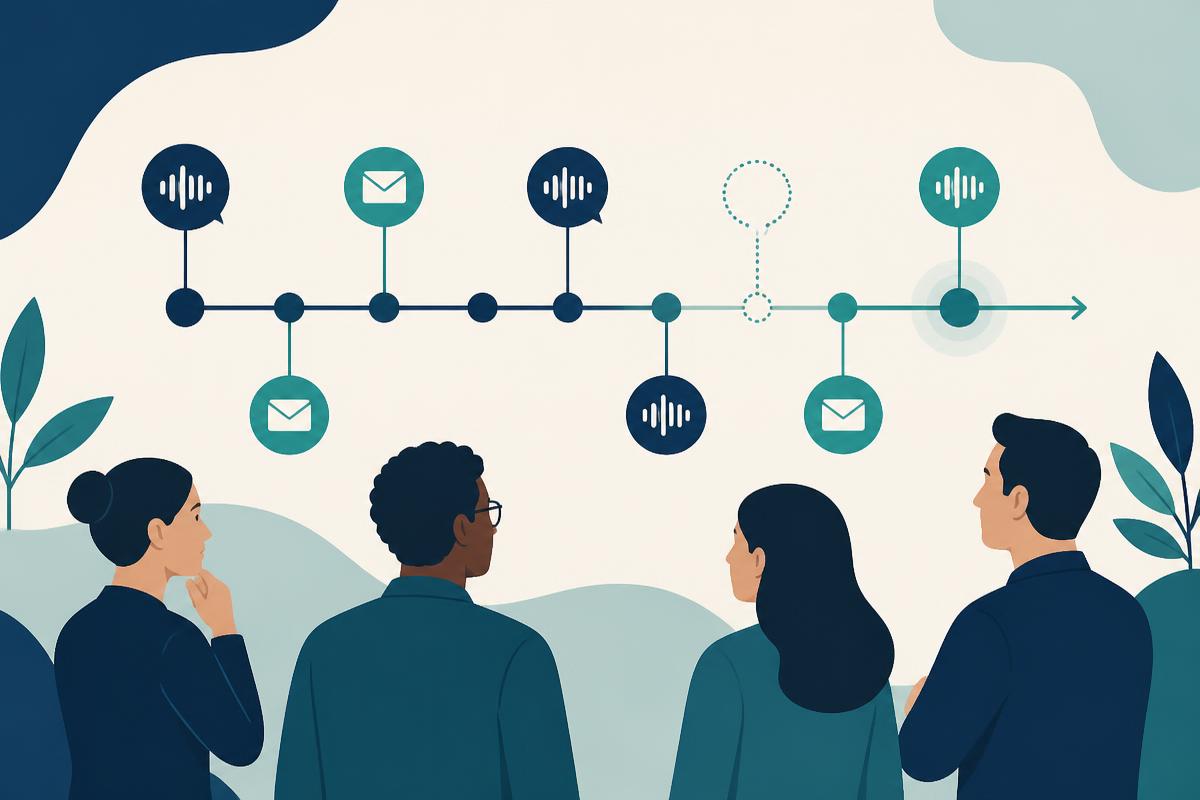
Cisco Webex Contact Center announced regional access to real-time transcripts on September 3. Cisco also introduced a Customer Insight Report covering frequent intents, primary channel, contact activity, and Auto-CSAT, with data collected only after beta or GA enablement. On September 1, it added AI-assisted prompt creation and refinement for autonomous agents.
Source: Cisco Webex Contact Center administrator updates
What This Means
Transcripts feed agent assistance, summaries, analytics, QM, and compliance review. A transcript gap can remove several capabilities at once.
Customer-level reporting can expose repeat contact that interaction-level dashboards miss. But Auto-CSAT is inferred. It should be compared with actual feedback, complaints, effort, repeat demand, and resolution.
A model-generated score can help leaders decide where to look. It cannot decide what happened to the customer.
6. Small Infrastructure Assumptions Can Become Voice Failures

Genesys warned that BYOC Cloud certificates begin renewing without the Client Authentication EKU in early September. Customer SIP endpoints that incorrectly require client certificates during outbound TLS handshakes may reject connections. Genesys advises customers to verify that endpoints do not send a Certificate Request.
Source: Genesys BYOC Cloud certificate notice
This is a configuration-risk notice, not evidence of a widespread outage.
What This Means
Reliability includes certificate purpose, mutual-TLS assumptions, SBC and carrier settings, firewall behavior, monitoring, ownership, and tested rollback.
Reliability often fails at the boundary between systems, where each team believes the other side owns the configuration.
7. AI-Generated Analytics Are Moving Toward Supervisor Workflows

Talkdesk documented on September 3 a staged upgrade to Explore, with maintenance planned through November and general availability of Explore Insights targeted for December. Explore Insights and Data Copilot remain in preview.
Source: Talkdesk Explore Insights product notice
What This Means
Natural-language analytics can reduce query effort. It can also make weak explanations sound authoritative.
Supervisors need the source data, filter and time-zone logic, metric definitions, incomplete-data warnings, a distinction between correlation and cause, and a path from insight to owner and corrective action.
An AI-generated explanation is a hypothesis until the operation verifies the cause and the corrective action works.
8. Omnichannel Service Still Depends on Operational Details
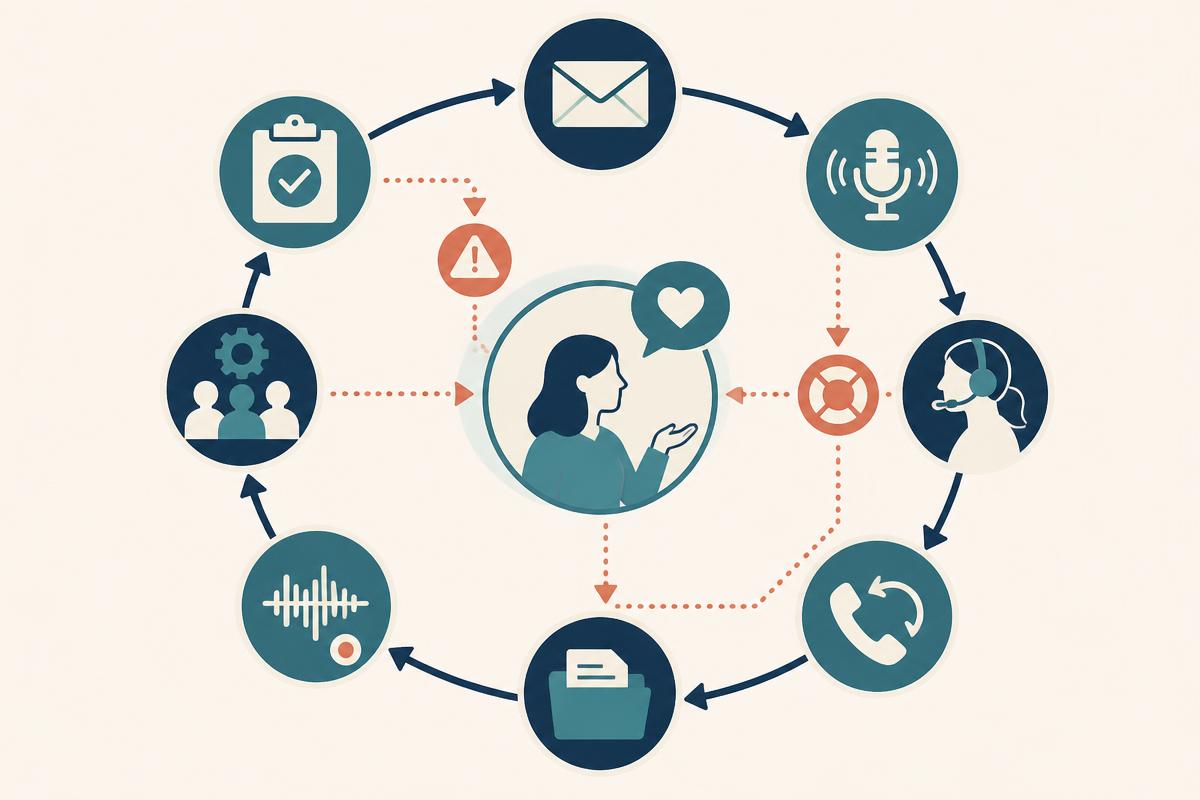
Google Cloud released CCaaS 6.9 on September 3. The release adds email handling to configured agent desktop layouts, allowing agents to work email interactions through an email adapter.
Source: Google Cloud Contact Center AI Platform release notes
The release also fixed issues that could affect real customer and employee work:
- Agents could not send new outbound emails.
- Voice callbacks were canceled at the end of operating hours instead of moving to the next day.
- Salesforce click to dial could overwrite a parent account's mobile number.
- Ending a call could cause substantial latency or connection errors.
- Hold music could overlap live conversation in recordings.
- Zendesk could navigate away from the active ticket after a call.
- Deleted operating hour groups could be missing from the audit dashboard.
These are not headline features. They are the operating conditions that determine whether the channel works correctly.
What This Means
Adding email to the desktop does not automatically create omnichannel service.
Leaders still need to validate routing and ownership, thread and customer identity, service level and aging logic, concurrency assumptions, work state and disposition, CRM writeback, attachments and security, audit records, escalation between asynchronous and live channels, and WFM capture of active and deferred work.
For QM, recording integrity and correct interaction context are essential. Hold music overlapping a conversation can affect transcription, automated evaluation, compliance review, and the evidence available during a dispute.
For WFM, a callback that disappears at the end of the day is not removed demand. It is unfinished customer work.
A new channel is an output. Preserving the work, context, ownership, and customer promise across that channel is the outcome.
9. AI Availability Is Now a Customer Service Resilience Issue
OpenAI, Anthropic, and xAI experienced overlapping service disruptions on September 3. Wired reported different explanations where providers supplied them, and no shared cause was confirmed. OpenAI's public status page subsequently showed its services operational.
Sources: Wired report on overlapping AI provider outages · OpenAI status
These were not identified as CCaaS outages. But many customer service systems increasingly depend on external models for virtual agent responses, agent assistance, summarization, classification and routing, knowledge retrieval, disposition suggestions, quality evaluation, translation, and automated actions.
The contact center platform can remain online while an important layer of the service operation becomes unavailable or unreliable.
What This Means
AI should be included in business continuity and disaster recovery planning.
Contact centers should define which workflows depend on each external model, what happens when latency or errors rise, when to stop automated actions, whether another approved model can be used, which functions can fall back to deterministic rules, when customers must be transferred to people, how queues and staffing change, what agents and customers are told, and how unfinished tasks are reconciled after recovery.
Multi model architecture can reduce reliance on one provider, but it also creates new testing, governance, privacy, consistency, and cost requirements. Failover is not simply switching an API endpoint.
If AI has become part of the workforce, its absence must be included in the workforce plan.
Quality Management, WFM, and Governance Implications
Quality Management
When resolution becomes billable, QM needs an independent role in validating it.
Quality teams should sample charged resolutions and compare the interaction with case status, actions taken, repeat contact, reversals, complaints, and downstream repair. Evaluation criteria for AI should cover knowledge grounding, tool selection, action accuracy, policy compliance, escalation, handoff context, and durable resolution.
Sentiment is not enough. A customer can provide neutral or positive feedback before discovering later that the transaction failed. Negative feedback can identify a problem, but its absence does not prove success.
Workforce Management
WFM should model the total workload, not only contacts removed from human queues.
Track AI escalations, exception reviews, disputed resolutions, correction work, reopened cases, outage related volume, backlog recovery, and the additional skill required for complex interactions reaching employees.
Governance and Compliance
Outcome based pricing requires auditable definitions and evidence. Organizations need clear permissions, retention, traceability, dispute handling, and customer recovery paths.
The EU AI Act remains applicable from August 2, 2026, with staggered exceptions and timelines. Organizations operating within its scope should continue validating transparency, risk, and governance obligations against authoritative guidance.
Source: European Commission AI Act overview
Questions Leaders Should Ask
- What exact customer need must be completed before we count and pay for a resolution?
- How long must the result remain valid?
- Do repeat contacts, reopened cases, reversals, or employee corrections invalidate the result?
- Can QM independently audit the vendor's resolution decision?
- Are bundled capabilities actually used, or are we paying for theoretical value?
- Did data and workflow redesign precede the AI deployment?
- What new work did automation create for agents, supervisors, quality teams, or the back office?
- Does email work enter routing, CRM, QM, WFM, analytics, and audit systems consistently?
- Which customer workflows depend on an external model provider?
- What happens to customers, queues, and automated actions during model degradation?
- Can employees recover the work with the customer context intact?
- Who owns the result across the vendor, model, platform, workflow, and human teams?
The Ownership Gap™ Perspective
Outcome based pricing appears to close part of the Ownership Gap because the vendor is paid for a result rather than activity.
But the gap does not disappear. It moves into the definition of the outcome.
The AI provider may count a resolved conversation. The CRM may close a case. The contact center may record containment. The WFM team may remove the volume from staffing demand.
Meanwhile, the customer may call again. An employee may repair the record. A back office team may complete the task. A complaint may appear days later.
Every system can be correct according to its own measure while the organization still fails to own the complete result.
The answer is not to reject outcome based pricing. It is to make the outcome complete, durable, auditable, and connected to the customer's actual need.
Conclusion
This week moved customer service AI closer to an outcome based operating model.
The progress is real: new commercial structures, clearer workflow examples, more unified service tools, and growing attention to resolution.
The responsibility is also larger.
Leaders must define what resolution means, measure what returns, plan the work automation creates, and prepare for the technology to fail.
The future of customer service will not be determined by how many interactions AI handles. It will be determined by whether the organization can prove that the customer's need was completed and someone remained accountable from beginning to end.
Sources and Further Reading
- Salesforce new editions and pricing
- Salesforce customer deployment examples
- Salesforce Agentforce Help Agent pricing and availability
- 8x8 AI Studio update
- Amazon Connect release notes
- Cisco Webex Contact Center administrator updates
- Genesys BYOC Cloud certificate notice
- Talkdesk Explore Insights product notice
- Google Cloud Contact Center AI Platform release notes
- Wired report on overlapping AI provider outages
- OpenAI status
- European Commission AI Act overview
Research reviewed through September 4, 2026. Availability, pricing, licensing, geography, language support, deployment timing, and configuration can vary. Vendor and customer reported results are not independently verified unless explicitly stated. Every organization should validate vendor claims against its own customer population, workflows, data, architecture, workforce effects, compliance requirements, total cost, and durable resolution measures.
Share and keep reading
About the Author
Operational Intelligence and AI-powered customer experience leader with more than 20 years of experience across contact center operations, workforce management, customer experience strategy, product marketing, competitive intelligence, and enterprise transformation. Creator of The Ownership Gap™.