Operational Intelligencefor the AI Era.
Helping organizations align AI, operations, workforce strategy, customer experience, and business outcomes.
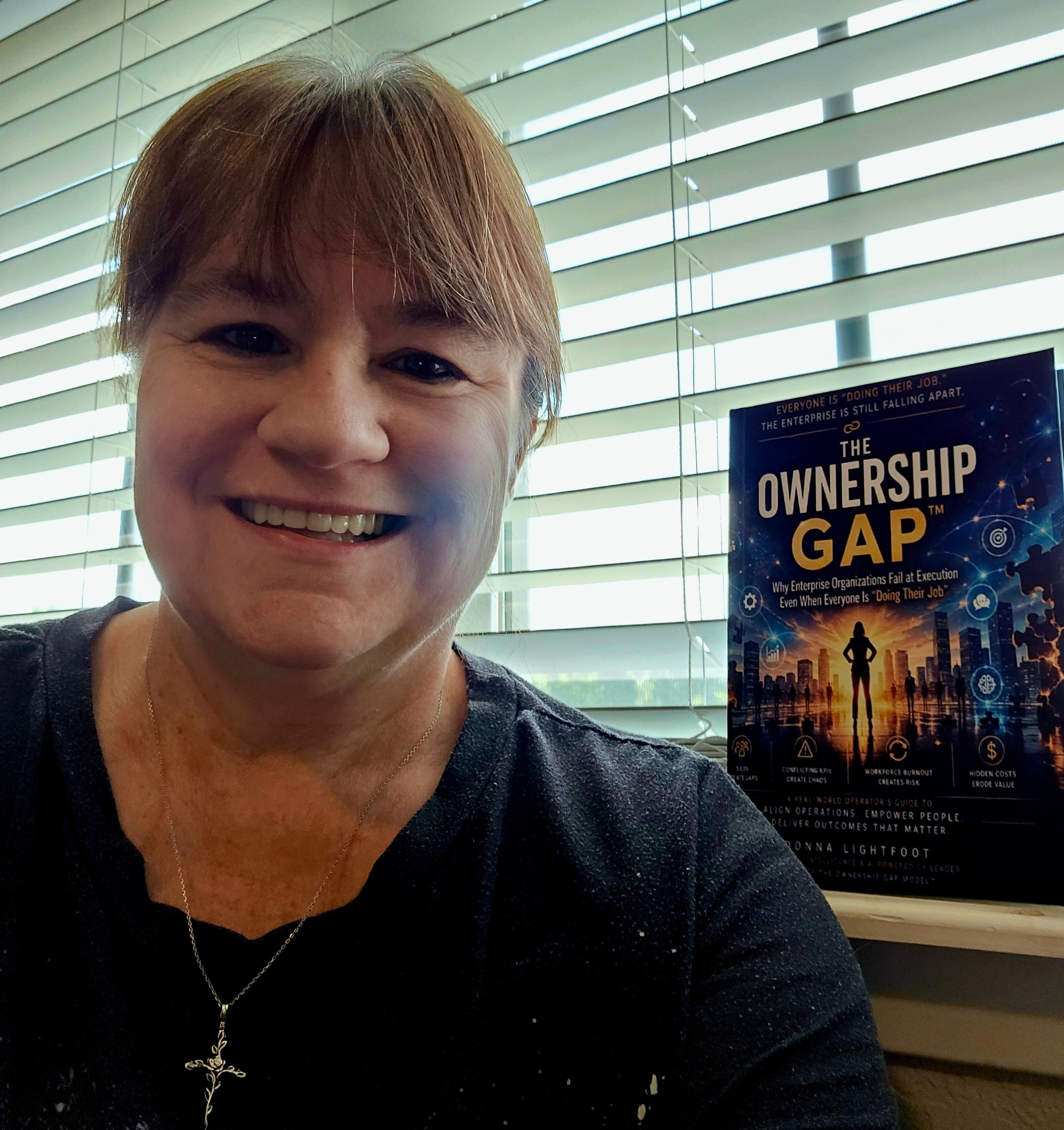
Donna Lightfoot — 15+ years leading Workforce Management, Contact Center Operations, Product Marketing, Competitive Intelligence, Healthcare Operations, and AI-powered Customer Experience. Author of The Ownership Gap™.
- 15+ years in AI-powered CX, operational intelligence, and workforce strategy
- $200K+ workforce savings delivered
- 179% WFM revenue growth influence
- Expanded CI coverage from <10 to ~200 competitors
- Enterprise experience: healthcare, SaaS, retail, consulting, regulated industries

Every department owned part of the process. Nobody fully owned the outcome.

Meet Donna Lightfoot
Donna Lightfoot is a Workforce Strategy, Product Marketing, Competitive Intelligence, and Contact Center Operations leader with more than 20 years of experience helping organizations improve performance through operational alignment.
- $200K+ workforce savings
- 3,600+ overtime hours eliminated
- 179% WFM revenue growth influence
- Large-scale workforce transformations
- AI-powered CX strategy leadership
Measurable outcomes across workforce, CX, and GTM.
Where operational depth meets executive strategy.
Published executive insights from Donna Lightfoot
Original thinking from Donna's cornerstone research on Operational Intelligence™, AI Readiness, Customer Experience, Product Marketing, and Enterprise Execution.
Every department owned part of the process. Nobody fully owned the outcome. That is The Ownership Gap™.
AI is not fixing broken operations. It is exposing them.
Product marketing built in operations doesn't sell features — it sells outcomes.
The CX market isn't consolidating. It's being rewired around AI-era operating models.
The silent killers of contact center performance aren't visible on any dashboard — and headcount rarely fixes them.
Most product marketing doesn't fail on messaging. It fails at reality.
Executive perspective on AI, operations, and enterprise execution.
The Ownership Gap™: The Real Reason AI Initiatives Fail (And Why It's Not the Technology)
AI ROI is downstream of operational readiness — ownership clarity, KPI alignment, workflow continuity, and workforce positioning.
Read on LinkedIn ↗What the Thoma Bravo, Verint, and Calabrio Consolidation Means for the Future of Contact Centers
The CX market isn't consolidating — it's being rewired. What suite plays mean for AI, WEM, WFM, and enterprise CX leaders.
Read on LinkedIn ↗The Ownership Gap™: What Prior Authorization Reveals About AI, Healthcare Operations & Business Outcomes
Prior authorization is the cleanest case study in fragmented ownership across payer, provider, and patient — and where AI actually earns ROI.
Read the article →From the Floor to the Market: An Operator's POV on AI-Powered CX
Product marketing built on operator credibility — how frontline reality reshapes category positioning and buyer trust.
Read on LinkedIn ↗Most Product Marketing Doesn't Fail at Messaging. It Fails at Reality.
Repositioning around outcomes buyers actually experience is the difference between narrative theater and revenue growth.
Read on LinkedIn ↗Why organizations hire Donna Lightfoot.
Measurable business outcomes — not job titles.
Where strategy, operations, GTM, and AI converge.
- Positioning & Messaging
- Outcome-Based Launches
- Sales Enablement
- Category Narratives
- Outcome-Based WFM
- Forecasting & Scheduling
- AI-Augmented Planning
- Operational Analytics
- Win/Loss Programs
- Battlecards & Enablement
- Market Analysis
- Analyst Alignment
- Ownership Gap Model™
- AI Operating Model
- Failure-Demand Elimination
- Measurable AI ROI
Frameworks I've authored.
The Ownership Gap Model™
Outcomes over outputs — resolution, cost, and experience as the operating system for AI-powered CX.
Silent Killers of Contact Center Performance
Repeat contacts, failure demand, and hidden operational inefficiencies that quietly destroy economics.
Outcome-Based WFM
Why volume × AHT is broken — and what a business-outcome operating model looks like instead.
AI in CX
Why AI-powered CX without operational ownership fails to deliver the promised gains.
Where I'm investing strategic energy right now.
Resolution- and cost-aligned AI strategy across the enterprise customer operations model.
Surfacing what dashboards hide — friction, failure demand, and operational governance gaps.
Outcome-based workforce operating models that align capacity with business value.
AI inside the enterprise operating model — not bolted on next to it.
Win/loss programs and CI systems that move category share and strengthen GTM alignment.
Resolution, cost, and experience as the enterprise operating system — not isolated KPIs.
Rewiring enterprise customer operations around outcomes, organizational alignment, and transformation accountability.
Strategic statements that shape every engagement.
Volume × AHT is a measurement of cost — not a strategy.
Operational reality matters more than dashboard optics.
AI should reduce friction, not automate inefficiency.
Customer experience is an operational discipline.
The operating philosophy behind every transformation I lead.
These principles guide enterprise operating model design, AI governance in customer operations, and workforce strategy — ensuring transformation accountability at the VP and executive level.
Optimize outcomes, not isolated KPIs.
Align ownership across customer journeys.
Reduce operational friction before scaling automation.
Treat workforce strategy as business strategy.
Use AI to improve decision-making, not complexity.

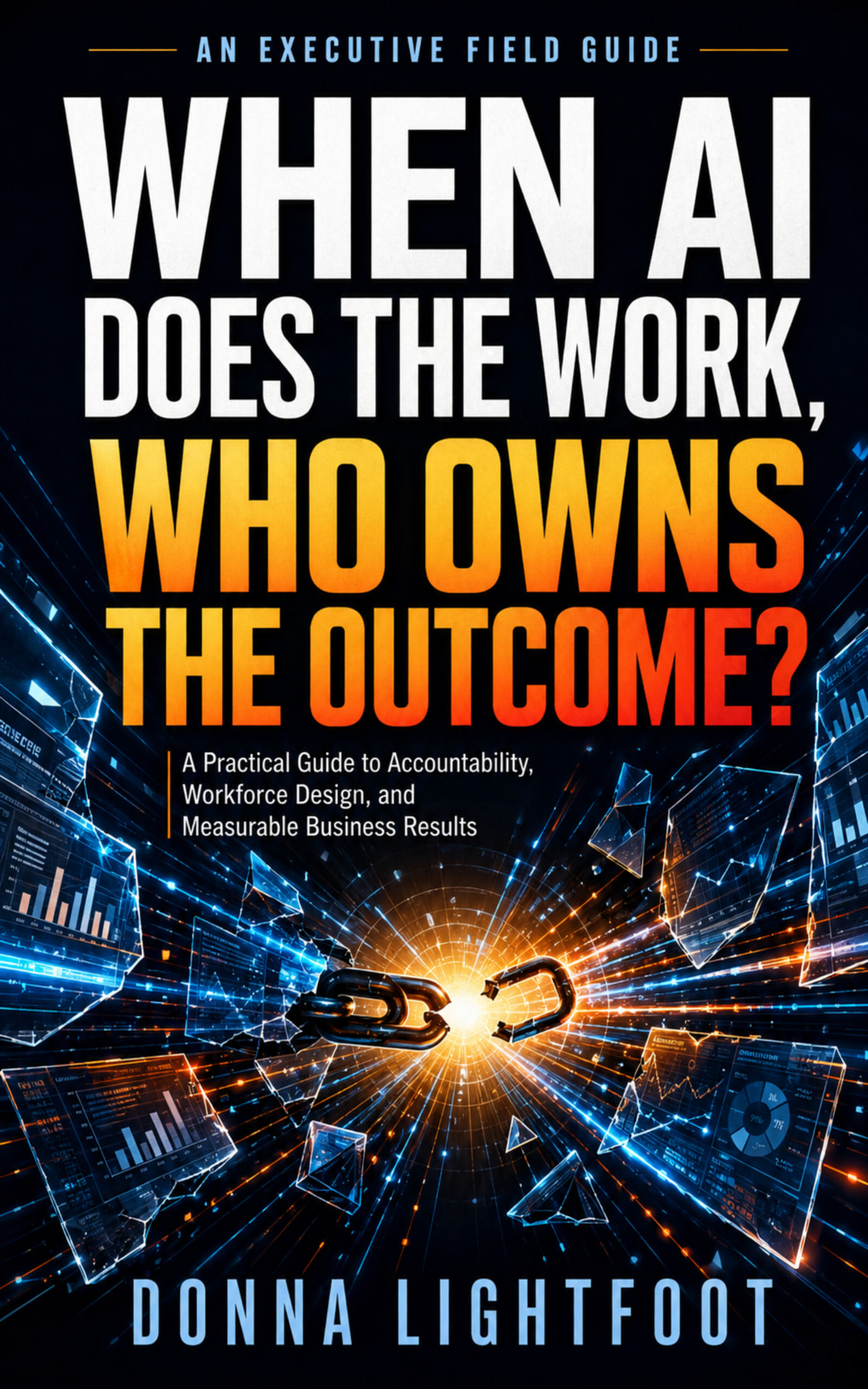
The Ownership Gap™ — why enterprise execution breaks even when everyone is doing their job.
A practical guide for leaders accelerating AI, automation, and digital transformation — introducing operational frameworks to resolve the fragmented ownership undermining enterprise execution.
Frameworks and topics — one page each.
Five things most operators get wrong about modern CX operations.
The category rewards conventional wisdom. The operating reality rewards the opposite. These are the contrarian positions that shape every framework, transformation, and AI-powered CX engagement I lead.
Service level proves operational health.
Service level measures answer speed — not resolution, not experience, not cost-to-serve. Hitting SL while repeat contacts climb means the operation is failing in slow motion.
AI automatically improves CX operations.
Without operational ownership, AI scales the existing inefficiency. Automating bad workflows just creates faster, cheaper failure demand — and obscures who's accountable for the outcome.
Dashboards reveal operational reality.
Dashboards aggregate. Friction hides between rows — in repeat contacts, escalation loops, rework cycles, and handoffs that never get counted. The most expensive work is the work no metric tracks.
WEM programs optimize performance.
Most WEM programs optimize activity — schedule adherence, QA scores, shrinkage — not outcomes. Until quality, workforce, and performance share one outcome signal, the program manages effort, not results.
Strong messaging is enough to win.
PMM fails without operational context. If the buyer's pain is operational and the message is about features, you lose the deal — and you never know why. Operator credibility is the unfair advantage.
The next operating model for customer experience is being designed right now.
A forward-looking view on where AI-powered CX is heading — and the operating decisions enterprise leaders need to make now to be credible in 24 months.
AI-powered workforce strategy
Workforce planning shifts from headcount math to capacity orchestration — humans, AI agents, and automation modeled as a single operating system tuned to outcomes, not occupancy.
Operational orchestration
The next decade of CX is won at the orchestration layer: routing work — not just contacts — across humans, copilots, and autonomous agents based on intent, risk, and resolution probability.
Workflow intelligence
Real-time visibility into how work actually moves — where it stalls, repeats, or escalates. Workflow intelligence replaces dashboards that measure activity with systems that measure flow.
Autonomous operational systems
Self-correcting operations that detect failure demand, rebalance capacity, and trigger workflow changes without waiting for a quarterly review. Autonomy with guardrails — not autonomy without accountability.
AI governance in CX operations
Clear ownership for model behavior, escalation thresholds, and customer-facing decisions. Governance becomes an operating discipline — not a compliance checkbox bolted on after launch.
Human + AI operating models
Roles redesigned around judgment, escalation, and exception handling. The leaders who win will define what humans uniquely do — and engineer everything else for AI-native execution.
"The organizations that win the next decade of CX won't have the most AI. They'll have the clearest ownership of what AI is accountable for."
Strategic lessons earned in the operation — not borrowed from a playbook.
Every framework, transformation, and contrarian position on this site comes from frontline operational experience — watching what actually happens when AI, workforce, and customer experience meet real organizations.
The dashboard said everything was green.
I watched a contact center operation celebrate 'good service level' while repeat contacts climbed 23% and overtime hit 3,677 hours in a single quarter. The metrics were lying. That's when I started designing around outcomes, not dashboards.
The escalation that changed how I think about ownership.
A frontline agent escalated the same issue four times in one day. Each handoff had its own KPI. None of them tracked the fact that the customer was still unresolved. The Ownership Gap Model™ was born from moments like that.
When overtime became the cost of misalignment.
I saw workforce teams optimizing for schedule adherence while operations burned through overtime trying to cover demand they'd never actually forecasted. The WFM wasn't broken — the operating model was.
ICD-10 didn't just change codes. It exposed failure demand.
During the ICD-10 transition, contact volume didn't rise because patients got sicker. It rose because the system created work it should never have needed. Healthcare taught me that operational complexity isn't a staffing problem — it's a design problem.
A $2M WEM implementation with zero outcome accountability.
I watched a company invest millions in workforce technology, only to realize six months later that quality, performance, and workforce teams were still optimizing for three different scorecards. Tools don't transform operations. Ownership does.
What agents taught me that no dashboard ever did.
I spent hours listening to agents explain why customers called back. None of the reasons showed up in reporting. That gap — between frontline reality and executive visibility — is the single most expensive blind spot in customer operations.
Recent thinking from the front of the category.
Why AI-Powered CX Still Struggles With Operational Ownership
"Until AI sits inside a clear operational ownership model, the savings stay theoretical."Read on LinkedIn ↗Workforce Strategy
Outcome-Based WFM: Why Volume × AHT Is Broken
"Schedule for the business you want — not the queue you have."Read on LinkedIn ↗Operations
Silent Killers of Contact Center Performance
"The real cost lives in the work you should never have created in the first place."Read on LinkedIn ↗
"She consistently translates complex data into clear, actionable insights — and understands how those insights need to land with product, marketing, and operations to actually drive action."
Verified recommendations from executives, peers, and operators.
“Donna is one of the most operator-grounded leaders I have worked with — she translates messy operational reality into strategy that boards and operators both trust.”
“Her ability to position complex workforce and AI-CX categories around buyer outcomes — not features — reshaped how our entire GTM motion talked about the market.”
“Donna eliminated years of mandatory overtime by fixing the planning and accountability model — not by adding headcount. The discipline she brings to workforce design is rare.”
Sourced from verified LinkedIn recommendations. View all on LinkedIn ↗
Senior and director-level leadership roles where strategy, operations, and AI-powered CX intersect.
“Customers experience one company. Most enterprises operate like five.”
Aligned with leading enterprise research.
The Ownership Gap™ framework aligns with research from Gartner, McKinsey, and Gallup on enterprise transformation, workforce burnout, operational alignment, and AI readiness.