The Contact Center Is Entering Its AI Accountability Era
Ten Trends Reshaping CX Technology, Quality Management, Workforce Strategy, and Connected Operations
An expanded market analysis of ten trends reshaping contact centers in 2026: resolution replacing containment, AI agents as operational workers, Quality Management extending to AI interactions, automated evaluation, sentiment as signal, governance and traceability, human and AI workforce planning, conversation intelligence, industry-specific AI, and platform consolidation alongside modular architecture.
Key Takeaways
- Contact-center AI is moving from answering questions to completing work.
- Resolution is beginning to replace containment and deflection as the more meaningful measure of AI performance.
- Quality Management is expanding from human-agent evaluation to oversight of both human and AI interactions.
- Sentiment analysis is becoming part of everyday supervisor workflows, but sentiment remains an inference—not proof of resolution or customer satisfaction.
- AI governance is moving from policy documents into operational platforms through disclosure, traceability, evaluation, permissions, and audit controls.
- WFM and WEM platforms are beginning to plan and monitor human and AI work together.
- Conversation intelligence is moving from retrospective reporting toward intervention, root-cause analysis, and workflow improvement.
- Industry-specific AI is gaining traction where customer interactions depend on complex operational rules.
- Agent desktops are evolving into orchestration surfaces for data, applications, cases, and AI assistance.
- CCaaS, CRM, WFM, QM, analytics, and AI are converging, but enterprises still need modularity and interoperability.
- The central question remains: who owns the result when work crosses systems, departments, human employees, and AI agents?
From AI Features to Operational Accountability
The contact-center technology market has reached an important turning point.
For the past several years, nearly every CCaaS, CRM, Workforce Engagement Management, and customer-service platform has introduced generative AI capabilities.
Summaries, suggested responses, transcription, sentiment analysis, virtual agents, automated evaluations, and agent assistance are quickly becoming expected features.
The conversation in 2026 is different.
Organizations are no longer asking only: Can AI handle the interaction?
They are beginning to ask: Can it complete the work, improve the customer's outcome, and prove that it did so safely?
The strongest recent developments are appearing across:
- AI-agent performance measurement
- Quality Management
- Sentiment analysis
- Workforce planning
- Conversation intelligence
- Case management
- Agent desktops
- Regulatory compliance
- Platform integration
- Industry-specific workflows
Together, these developments point toward a new phase of contact-center transformation: the AI accountability era.
1. Resolution Is Beginning to Replace Containment
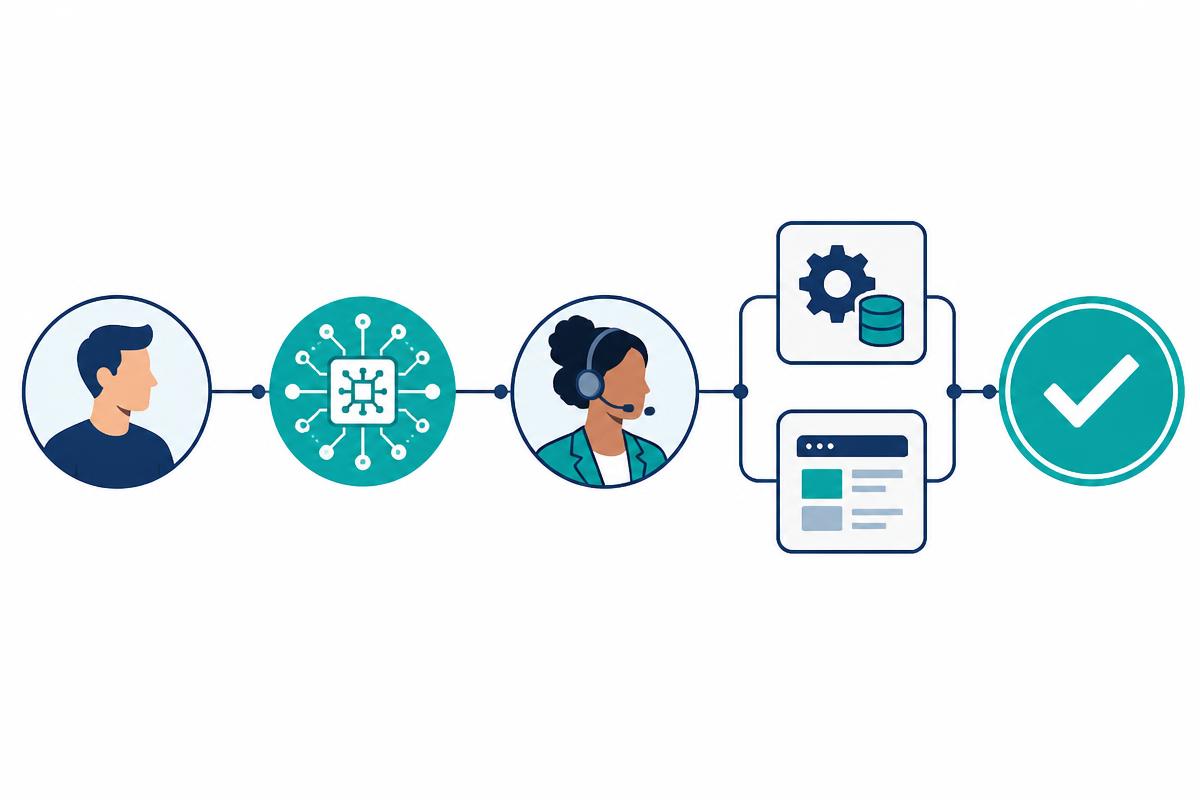
For years, contact centers have measured self-service primarily through containment and deflection.
Those metrics indicate whether a customer avoided a human agent. They do not prove the customer's problem was resolved.
That measurement gap is becoming harder to ignore.
Amazon Connect introduced AI-agent performance measures that include goal-success rate, faithfulness, and tool-selection accuracy. It also added AI-assisted evaluation capabilities that allow leaders to examine whether the AI resolved all of a customer's issues—not simply whether the interaction remained in self-service.
Sources: Amazon Connect AI-agent metrics · Amazon Connect generative AI evaluations
Five9 is making a similar shift by positioning voice AI agents around listening, reasoning, accessing systems, and taking action rather than simply responding to routine questions.
Source: Five9 AI Day 2026
Organizations should measure:
- Successful resolution
- Repeat-contact rate
- Restart rate
- Rework created after automation
- Customer effort
- Cost per successful resolution
- Escalation quality
- Downstream operational impact
Containment without resolution can simply relocate work.
This is the Ownership Gap appearing in AI measurement: one system may successfully contain an interaction while the organization still fails to own the outcome.
2. AI Agents Are Becoming Operational Workers
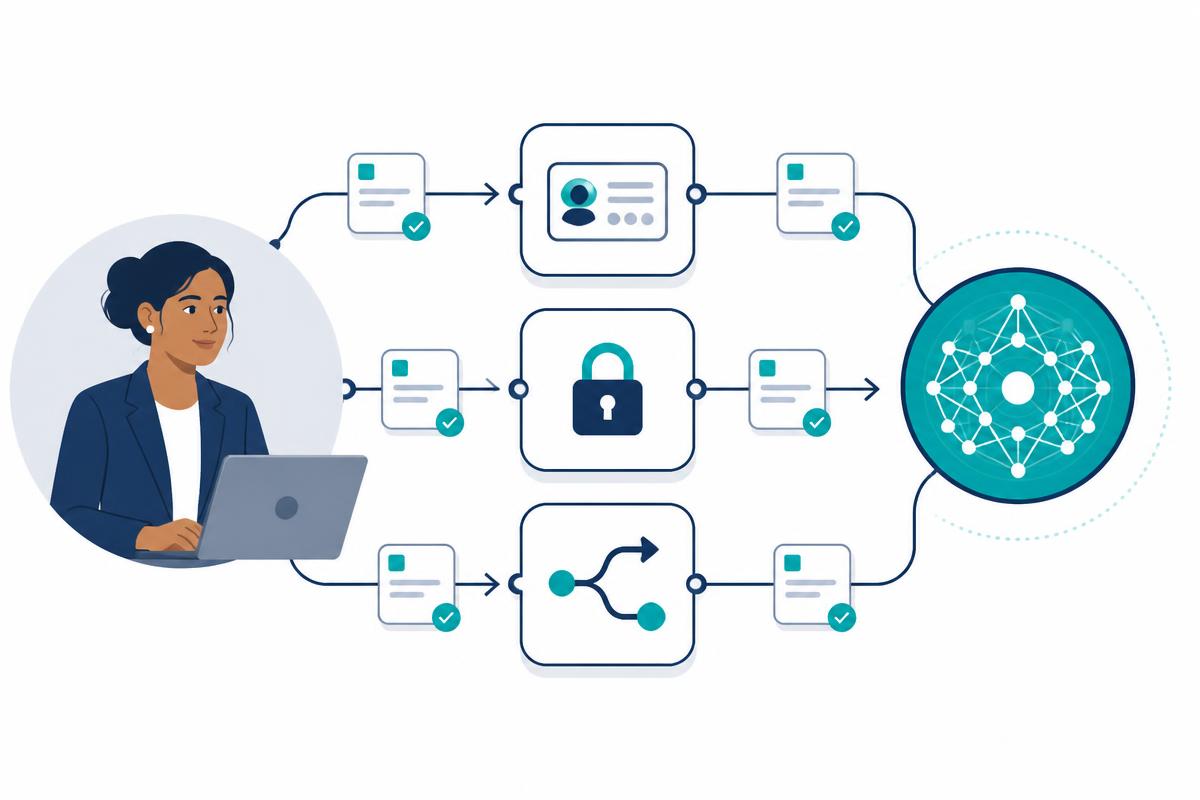
AI in the contact center is expanding beyond transcription, summarization, and suggested responses.
The next generation of AI agents is being designed to:
- Authenticate customers
- Retrieve information from connected systems
- Update records
- Initiate outreach
- Coordinate workflows
- Complete transactions
- Route exceptions to people
- Continue activity across channels
Salesforce launched Agentforce Contact Center to bring voice, digital channels, CRM data, routing, AI agents, and human-agent activity into one environment.
Source: Salesforce Agentforce Contact Center
NICE is positioning agentic AI as a native operating layer connecting AI agents, human employees, workflows, data, and enterprise systems.
Source: NICE AI-powered CX announcement
Twilio's Agent Connect provides multichannel orchestration across voice, SMS, chat, WhatsApp, and RCS, with persistent memory and compatibility with human escalation through Flex.
Source: Twilio Agent Connect
Talkdesk is extending agentic automation into proactive outbound engagement and complex industry workflows instead of limiting AI to reactive inbound service.
Source: Talkdesk proactive AI agents
Organizations must define:
- What the AI is authorized to do
- What requires human approval
- When escalation must occur
- Which team owns an incorrect action
- How AI-generated activity enters workforce plans
- How actions are traced and audited
- How customers recover when automation fails
AI may execute the task, but accountability still belongs to the organization.
3. Quality Management Is Expanding Beyond Human-Agent Evaluation
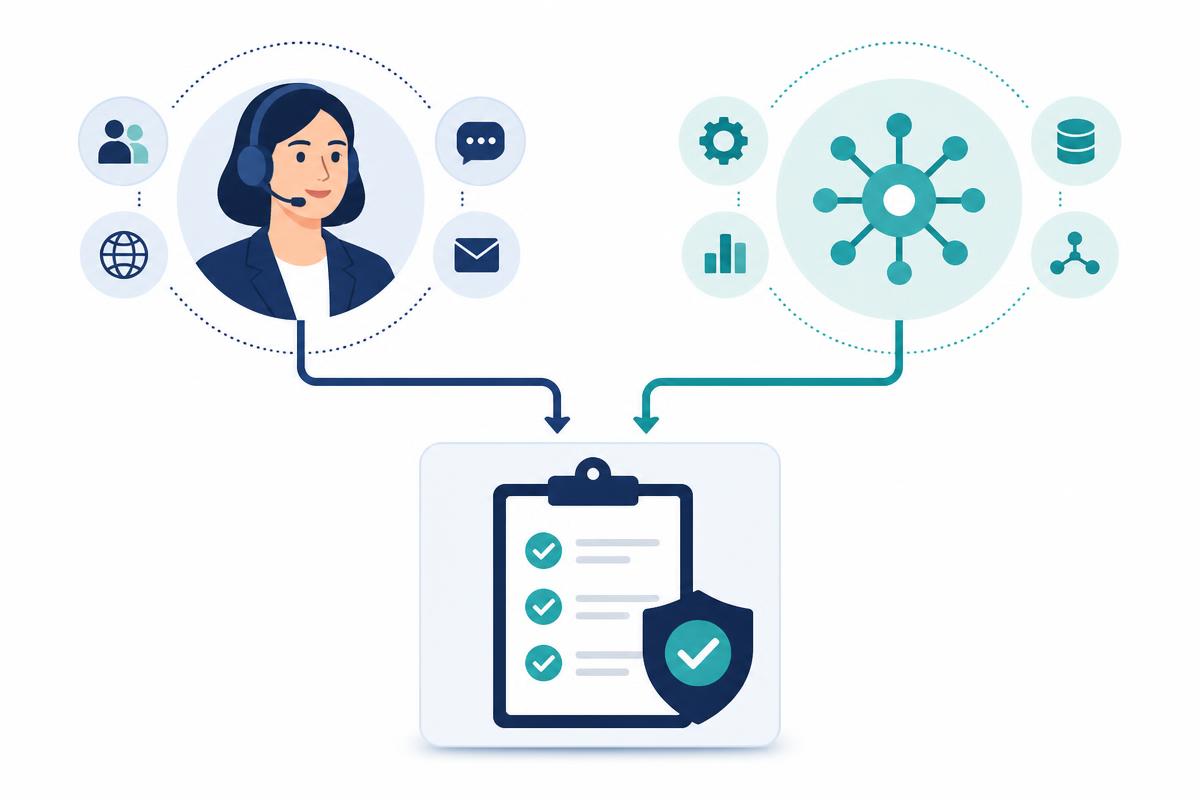
Quality Management has traditionally focused on evaluating human-agent behavior through a small sample of recorded interactions.
That boundary is changing.
Cisco is expanding Webex AI Quality Management to include AI-agent interactions. Its announced capabilities include assigning evaluation forms to AI agents, automatically evaluating their conversations, allowing supervisors to override AI-generated scores, and comparing human and AI interactions within a unified environment.
Cisco also plans to provide an AI Agent Performance Dashboard and speech-analytics measures such as dead-air time and word ratios. Customer sentiment for completed AI-agent interactions will be displayed alongside the type of agent handling the interaction.
Source: Cisco Webex Contact Center supervisor and AI Quality Management updates
The quality question is no longer only: Did the human agent follow the required process?
It is becoming: Did the human or AI agent handle the interaction accurately, compliantly, and effectively?
- Human-agent interactions
- AI-agent interactions
- AI-to-human handoffs
- Actions taken in connected systems
- Authentication and policy adherence
- Escalation timing
- Information preserved during handoff
- Tool-selection accuracy
- Unsupported or hallucinated responses
- Whether the issue was resolved
- Downstream correction work
Using the same quality form for humans and AI may not always be appropriate. AI agents may require criteria covering reasoning, tool access, action accuracy, escalation logic, policy boundaries, and traceability.
Quality Management is becoming a control system for the entire service operation—not just a scorecard for agents.
4. Automated Quality Evaluation Is Moving Into the Operational Mainstream
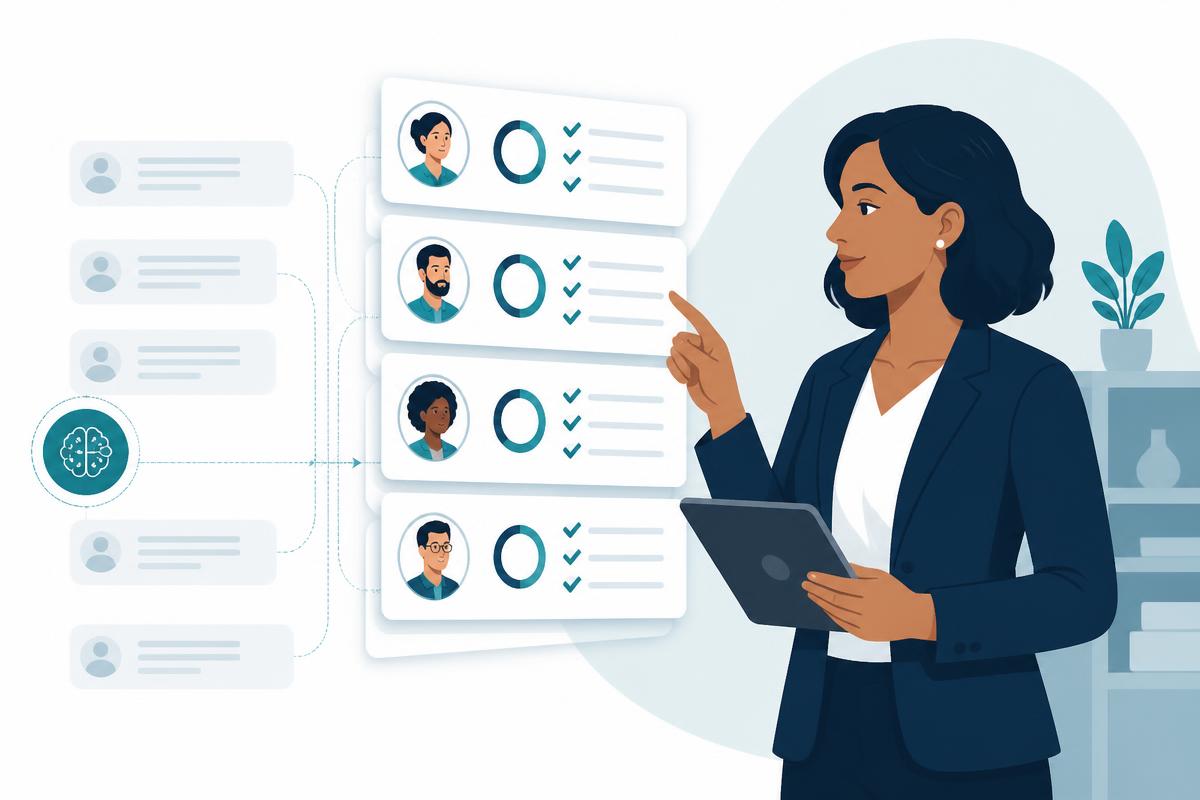
Cisco's AI QM capabilities include automated evaluations, AI-generated scores with supporting justification, speech analytics, coaching insights, and team-performance reporting.
Cisco says its platform can automatically evaluate up to 100% of interactions. However, the release described in its documentation is limited to English-language voice interactions and requires the appropriate AI Quality Management licensing.
Source: Cisco Webex Contact Center supervisor and AI Quality Management updates
NICE's CXone 26.3 release contains several less visible but operationally important QM improvements:
- Evaluation distribution is more tightly aligned with the leading agent's team membership.
- Tenant segmentation can separate forms, plans, evaluations, and calibrations by organizational division.
- Custom evaluation headers can be included in external API data for deeper analysis.
- CRM ticketing improvements can expand evaluation coverage when agent information is incomplete.
- QM administration pages include accessibility improvements.
Source: NICE CXone 26.3 release notes
These updates may receive less attention than autonomous AI, but they affect the integrity of the quality program.
If interactions are routed to the wrong evaluator, assigned under the wrong plan, excluded because of incomplete data, or unavailable for deeper analysis, the resulting quality score may be misleading.
Leaders need to validate:
- Evaluation criteria
- Distribution logic
- Scorecard design
- Language and channel limitations
- Override patterns
- Bias and accuracy
- Whether quality findings lead to operational change
Evaluating every interaction is an output. Improving the system because of what the evaluation found is the outcome.
Quality intelligence should evaluate the system around the employee—not just the employee.
5. Sentiment Analysis Is Becoming More Operational—and More Consequential
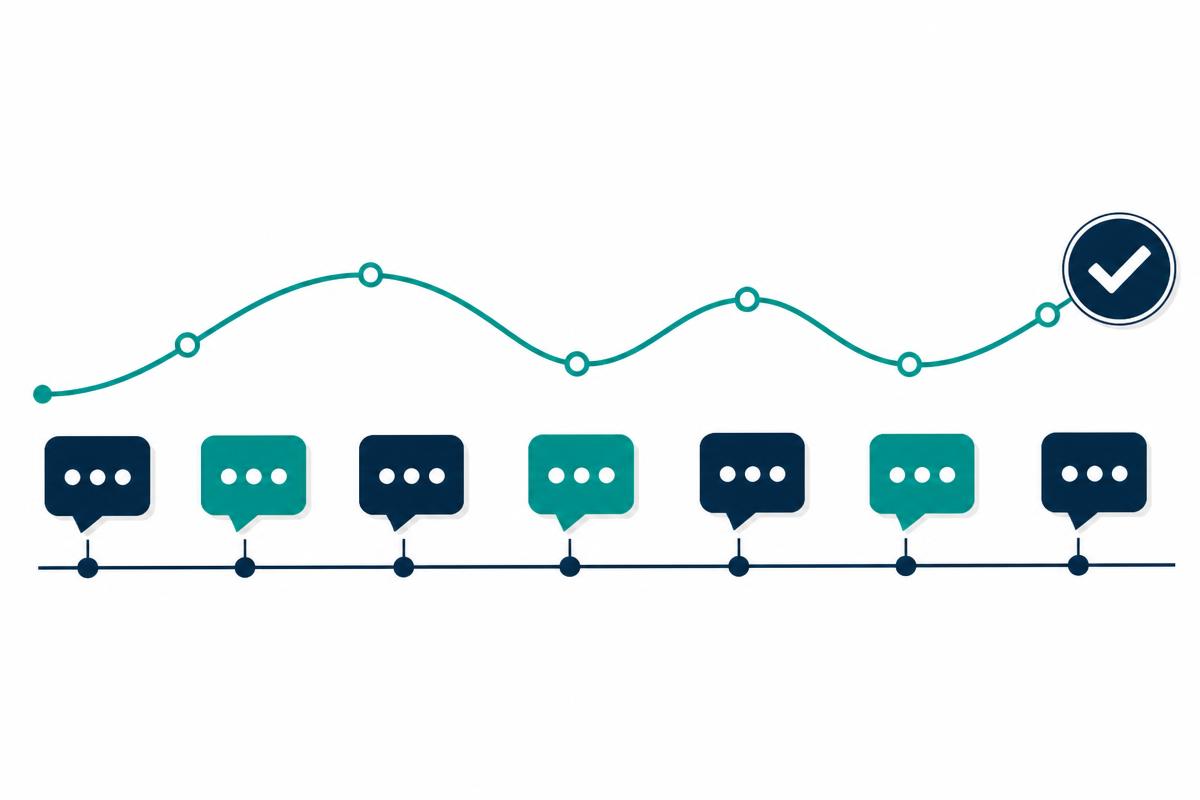
Webex Contact Center provides customer-sentiment scores for completed voice interactions, classifying them as positive, neutral, or negative.
Supervisors and Quality Managers can review and filter completed interactions using those classifications. Cisco is also extending sentiment visibility to completed AI-agent interactions, allowing supervisors to compare sentiment across human and AI conversations.
Source: Cisco Webex Contact Center sentiment capabilities
Used appropriately, sentiment analysis can help organizations:
- Prioritize interactions for review
- Identify possible escalation risk
- Detect recurring friction
- Find coaching opportunities
- Compare customer reactions across workflows
- Monitor the effect of product or policy changes
But sentiment should not be treated as a verified customer outcome.
A customer can sound calm while remaining unresolved. Another can express frustration during an interaction that ultimately produces the right result.
Accent, language, culture, disability, audio quality, channel, conversation context, and model design may also affect how sentiment is interpreted.
Organizations should ask:
- How accurate is the model across languages, accents, and customer populations?
- Can supervisors understand why the model assigned a score?
- Is sentiment being used to support employees or penalize them?
- Does negative sentiment correlate with repeat contact, escalation, complaints, or failed resolution?
- Are customers informed when emotion-recognition tools are used?
- What action occurs after a negative-sentiment signal appears?
- Does the intervention improve the eventual outcome?
Sentiment without context can become another score. Sentiment connected to resolution, effort, and root cause can become operational intelligence.
6. Governance, Traceability, and Disclosure Are Becoming Operational Requirements
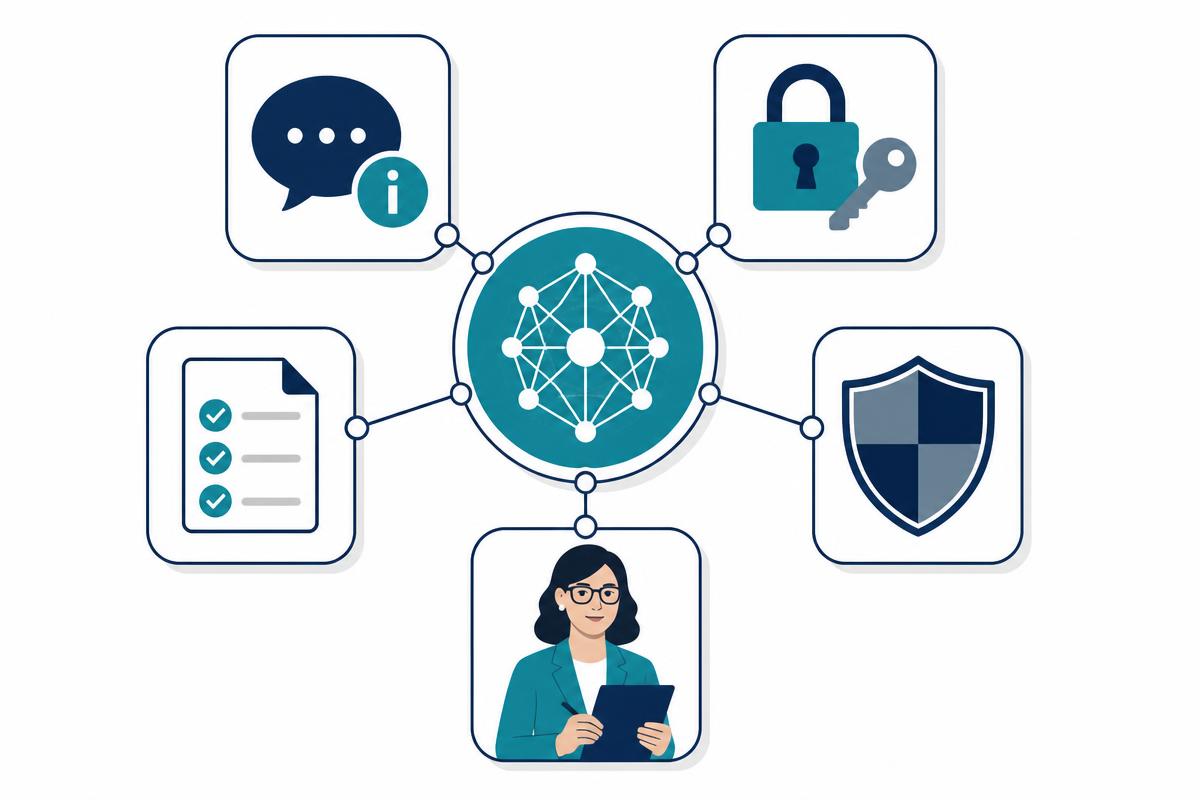
AI governance is moving beyond annual policies and review committees.
Amazon Connect provides AI-agent traces that allow organizations to examine how an agent reasoned, acted, and responded during a self-service voice interaction.
Source: Amazon Connect AI-agent traces
Amazon Connect also provides performance measures intended to help organizations monitor goal completion, faithfulness, and tool-selection accuracy.
Source: Amazon Connect AI-agent metrics
Regulatory requirements are adding urgency.
The European Union's AI Act became broadly applicable on August 2, 2026, with certain provisions following different timelines.
Article 50 requires people to be informed when they are interacting directly with an AI system. Deployers must also inform individuals when they are exposed to emotion-recognition or biometric-categorization systems.
Sources: European Commission Article 50 guidance · European Commission AI Act overview
These requirements may affect:
- AI voice agents
- Chatbots
- Virtual agents
- Synthetic voices
- Emotion-recognition tools
- Biometric categorization
- AI-generated customer communications
- Automated recommendations and actions
Organizations should define:
- Action-level permissions
- Human-approval requirements
- AI-to-human escalation rules
- Disclosure language
- Consent and notice
- Traceability and audit records
- Hallucination and faithfulness monitoring
- Policy and knowledge version control
- Incident response
- A named owner for the end-to-end outcome
The EU rules apply directly within their legal scope, but they may influence global platform design as vendors standardize disclosure and governance controls.
AI transparency is becoming part of the customer journey—not just part of the compliance policy.
The differentiator will not be which organization launches the most AI agents. It will be which organization can detect failure, explain what happened, correct it, and prevent recurrence.
7. Human and AI Workforce Planning Is Converging
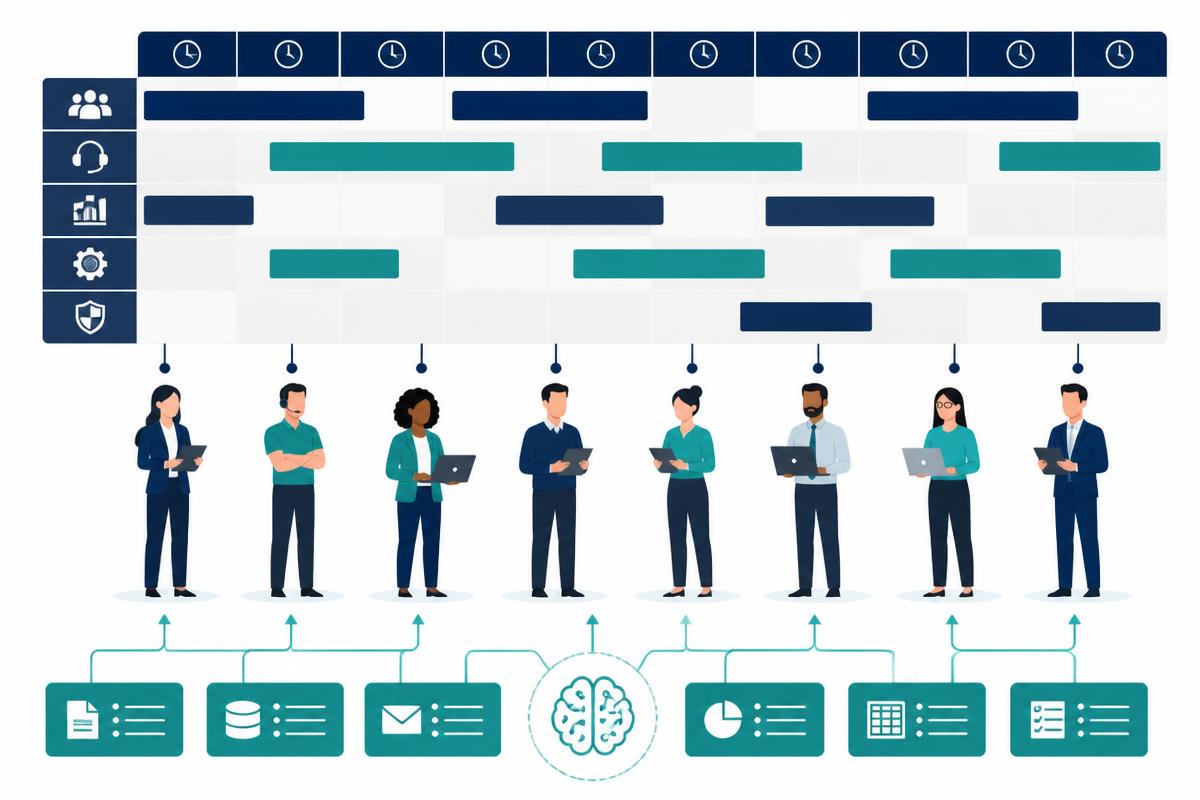
Contact centers are beginning to operate with interconnected human and AI workforces.
That changes Workforce Management.
When AI handles simple or predictable contacts, the work reaching human employees may become:
- More complex
- More variable
- More emotionally difficult
- More time-consuming
- More dependent on specialized skills
Historical volume and AHT assumptions may become less reliable. AI escalations may arrive with different timing, context, and skill requirements than traditional inbound demand.
Microsoft made Workforce Engagement Management generally available in Dynamics 365 Customer Service and Contact Center on June 30, 2026.
The platform brings forecasting, scheduling, real-time operations, and Quality Management into the same service environment used to manage human representatives and AI agents. Microsoft says forecasts can incorporate customer cases, conversations, and channel activity instead of relying only on disconnected historical inputs.
Source: Microsoft Dynamics 365 Workforce Engagement Management
Genesys continued building operational intelligence into WEM during August. Its August 10 release included system-detected historical forecast outliers, live screen monitoring, and AI scoring support.
Source: Genesys Cloud August 2026 release notes
AI may:
- Resolve some contacts
- Escalate complex contacts
- Alter arrival patterns
- Increase the complexity of human work
- Create monitoring and correction work
- Generate new offline tasks
- Change coaching requirements
- Create demand that traditional queue data does not capture
Workforce leaders should track:
- Contacts initially handled by AI
- Successful AI resolutions
- AI escalations by reason
- Escalation complexity
- Human handling time after escalation
- Repeat demand after AI service
- Post-interaction correction work
- Skills required for exception handling
- Emotional load
- Recovery time
- Back-office workload created by AI actions
The future of WFM is not about scheduling people around AI. It is about planning the complete workload created by customers, employees, systems, and AI together.
8. Conversation Intelligence Is Moving from Reporting Toward Intervention
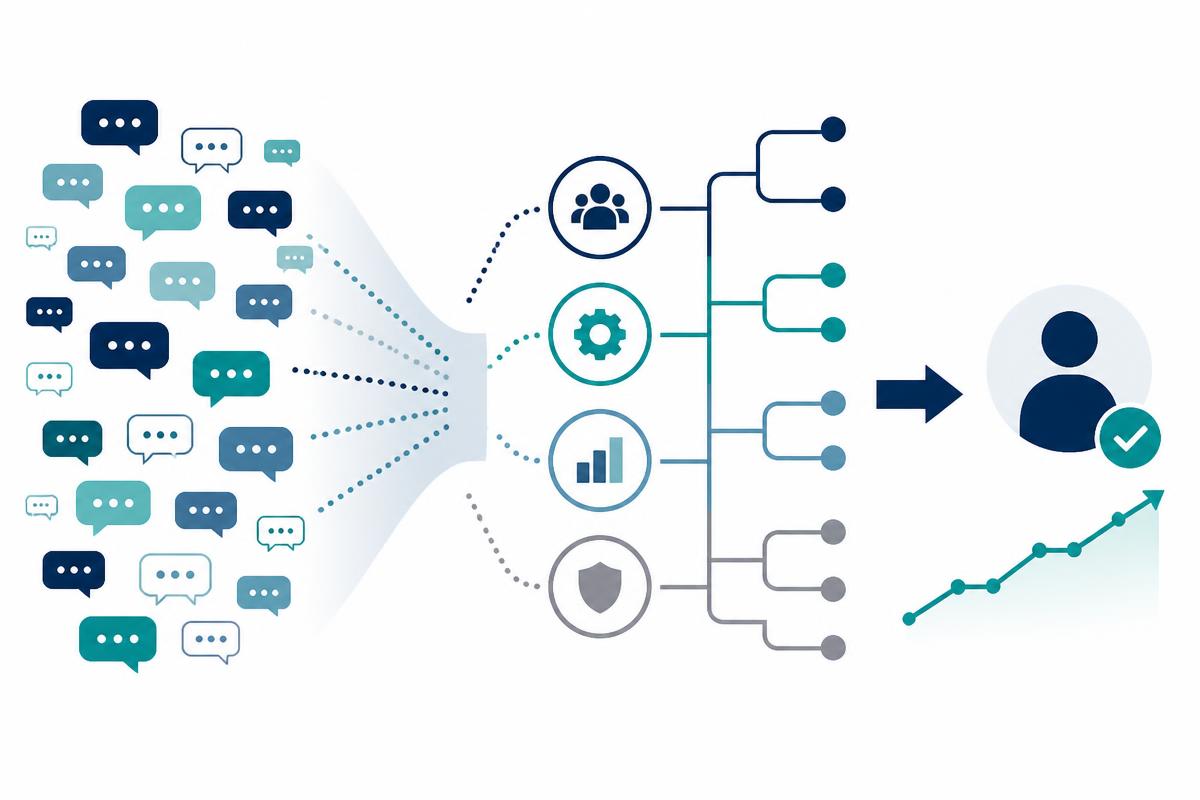
Genesys Cloud's August releases demonstrate how contact-center analytics are becoming more actionable.
Its August 17 release included:
- Additional filters and metrics in the Agent Copilot Performance dashboard
- A centralized case-management view for supervisors and case managers
Earlier in August, Genesys added:
- The ability to reprocess historical interactions using Speech and Text Analytics
- On-demand reprocessing with updated topics
- System-detected historical forecast outliers
- Intent-health insights for Agent Copilot
Source: Genesys Cloud August 2026 release notes
The ability to reprocess historical interactions is operationally significant.
When products, policies, topics, risks, or business questions change, organizations may be able to revisit existing conversations instead of waiting for enough new interactions to occur.
Organizations may use them to:
- Identify hidden failure demand
- Measure the effect of a policy change
- Detect complaints or compliance risks
- Discover emerging customer intents
- Examine repeat-contact drivers
- Find knowledge gaps
- Identify product friction
- Reassess conversations with improved models
- Connect interaction signals to cases and workflows
But the value does not come from producing more dashboards.
It comes from connecting an insight to:
- An owner
- A corrective action
- A resolution measure
- A follow-up review
- Evidence that the change worked
More visibility is not the same as more accountability.
9. Industry-Specific AI and Connected Agent Workflows Are Gaining Ground
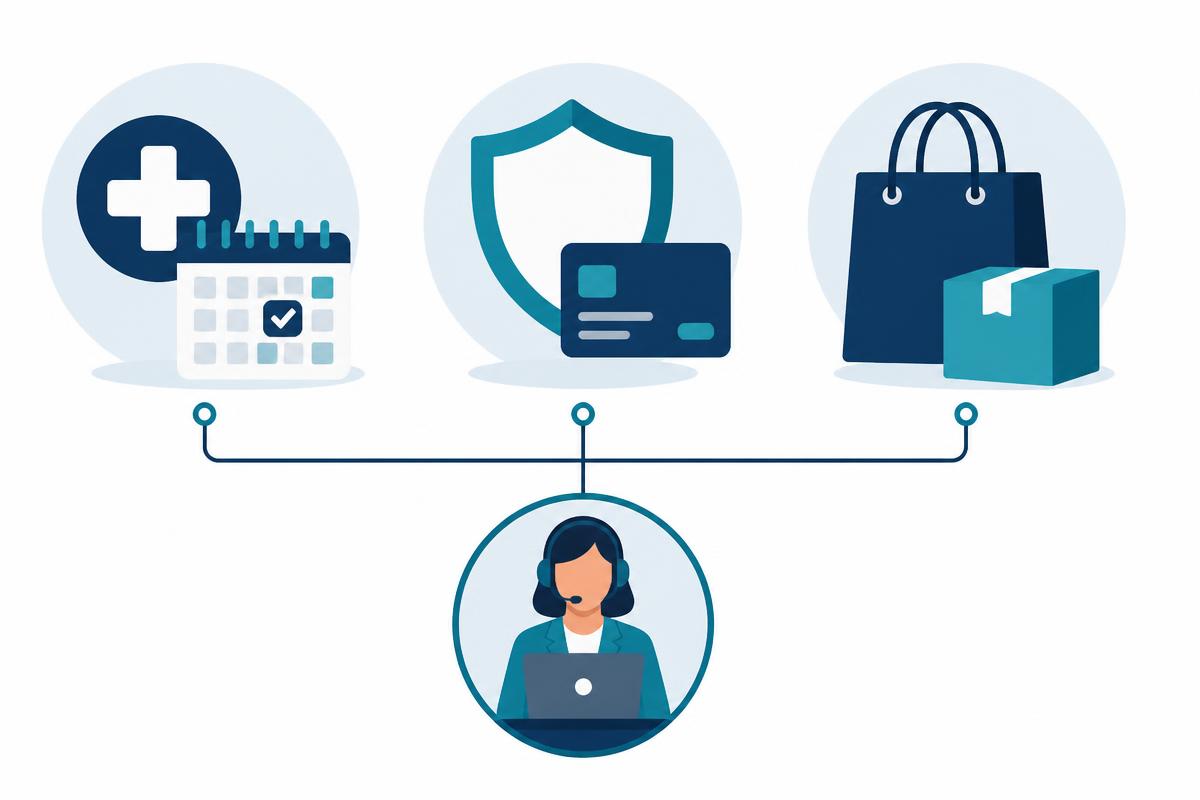
Generic AI capabilities are increasingly being packaged around industry workflows, terminology, regulations, and business rules.
Amazon Connect Health includes purpose-built AI agents intended to support patient engagement and healthcare administrative workflows.
Source: Amazon Connect Health
Talkdesk introduced agentic automation for complex specialty and team-based healthcare scheduling, where customer service depends on provider availability, appointment rules, dependencies, and patient access.
Source: Talkdesk healthcare scheduling
Talkdesk has also introduced industry-focused commerce and proactive-engagement capabilities for retail and financial services.
Source: Talkdesk commerce orchestration
At the desktop level, platforms are expanding the ability to connect contact-center work with external applications.
Google Cloud released CCaaS 6.3 on August 19. Its highlighted customer-facing feature allows the agent desktop to pass parameters through custom-panel URLs.
Source: Google Cloud Contact Center AI Platform release notes
Genesys added a centralized case-management view and the ability for Agent Copilot to surface responses from third-party applications.
Source: Genesys Cloud August 2026 release notes
A healthcare interaction may depend on:
- Scheduling
- Eligibility
- Clinical policy
- Prior authorization
- Patient access
A financial-services interaction may involve:
- Authentication
- Disclosure
- Fraud controls
- Regulatory requirements
The best agent desktop is not necessarily the one with the most embedded tools. It is the one that preserves context, reduces navigation, limits duplicate data entry, and supports successful completion of the work.
The most valuable AI will not merely understand the conversation. It will understand the workflow, rules, dependencies, and consequences of getting the decision wrong.
10. Platform Consolidation and Modular Architecture Are Advancing Together
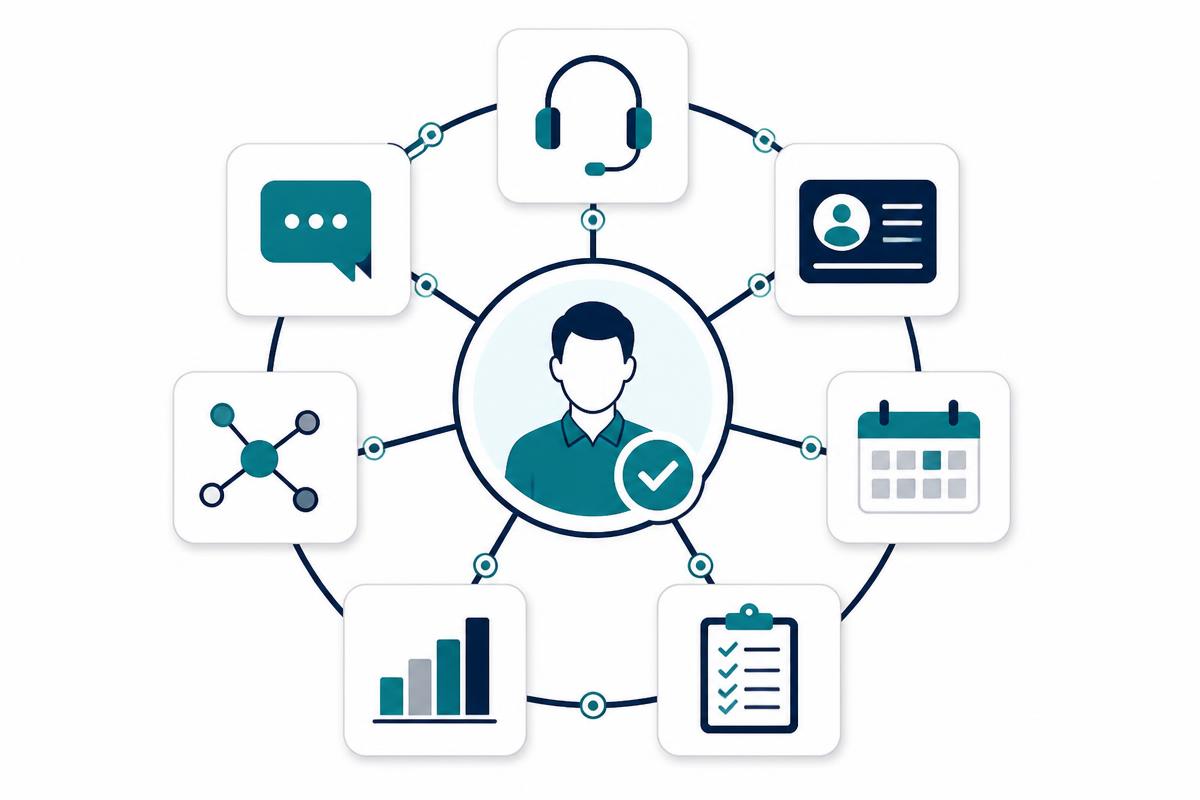
The market is moving in two directions that initially appear contradictory.
Major vendors are expanding unified platforms that connect:
- CCaaS
- CRM
- WFM
- QM
- Analytics
- AI agents
- Digital channels
- Workflow automation
Salesforce is connecting CRM, telephony, channels, routing, data, and AI through Agentforce Contact Center.
NICE is emphasizing a unified orchestration layer across AI agents, employees, workflows, and systems.
Verint and Calabrio are combining capabilities across WFM, quality, analytics, and automation. Following the combination, Verint began extending its AI bots to Calabrio customers while making Calabrio quality and performance capabilities available across the combined portfolio.
Source: Verint and Calabrio integration announcement
At the same time, enterprises continue to demand modular, interoperable architectures that connect existing CRM, workforce, communications, data, and business systems without requiring a complete replacement.
Source: Odigo's 2026 CCaaS trends
Buyers should evaluate:
- Whether customer context survives each handoff
- How easily data moves between systems
- Whether external AI models and applications are supported
- Who controls interaction and customer data
- How difficult it is to replace one component
- Whether reporting follows the complete outcome
- How consolidation could affect product roadmaps
- How overlapping products may be rationalized
- How pricing and licensing may change
- Whether integrations preserve operational accountability
The real choice is not suite versus best-of-breed. It is connected versus disconnected.
The best architecture is not necessarily the one with the most products. It is the one that preserves context and accountability from customer intent through resolution.
Trends Gaining Meaningful Traction
Resolution Is Becoming More Important Than Deflection
Platforms are introducing measures that move beyond whether an interaction stayed in self-service.
QM Is Becoming Enterprise Intelligence
Quality data can expose broken workflows, policies, knowledge, products, integrations, and automation—not just employee behavior.
Human and AI Performance Are Converging
Platforms are beginning to place human-agent and AI-agent performance within the same supervisor, WEM, analytics, and QM environments.
Governance Is Moving Into Daily Operations
Disclosure, traces, evaluation, permissions, override controls, segmentation, and auditability are becoming everyday operating requirements.
The Agent Desktop Is Becoming an Orchestration Layer
Customer context, cases, applications, workflows, knowledge, and AI assistance are increasingly being brought into a connected workspace.
The Technology Stack Is Converging Around Work
The goal is not simply to consolidate software. It is to preserve context and accountability across the complete workflow.
Questions Leaders Should Ask
- Are we measuring successful resolution or only automation and containment?
- Can our QM program evaluate both human and AI interactions?
- Do AI evaluation forms include criteria appropriate for AI actions and risks?
- Are AI-generated quality scores explainable, reviewable, and overrideable?
- Do sentiment scores correlate with repeat contact, customer effort, complaints, or resolution?
- Are disclosure and consent designed into AI-enabled interactions?
- Can WFM identify AI escalations, exception work, and downstream rework?
- Does customer context survive every system and departmental handoff?
- Can conversation insights trigger corrective action, or do they stop at a dashboard?
- Are employees being evaluated for failures created by systems, policies, or workflows?
- Can leaders trace what an AI agent did and why?
- Who owns a failure caused by AI, data, workflow, policy, or integration?
- Are vendor-reported efficiency gains reducing total work or moving it somewhere else?
- Can the organization prove that customer and business outcomes improved?
The Ownership Gap Perspective
The contact center is gaining more intelligence, but intelligence alone does not close the Ownership Gap.
- Automated QM can identify a problem.
- Sentiment can flag frustration.
- Analytics can reveal a pattern.
- AI can recommend or execute an action.
- WFM can predict demand.
- A unified platform can connect systems.
But none of those capabilities guarantees that someone owns the result.
The organizations that gain the most value from these technologies will connect every signal to:
- A responsible owner
- A defined action
- A resolution measure
- A cost measure
- A customer or employee outcome
- A feedback loop confirming whether the change worked
The contact center is becoming an orchestration layer for customer outcomes.
That creates the defining leadership question:
Who owns the result when the work crosses channels, systems, departments, human employees, and AI agents?
The organizations that lead the next phase of CX will be able to prove:
- The customer's issue was resolved.
- Repeat demand, rework, and customer effort declined.
- The total cost required to achieve the outcome improved.
- Human and AI work remained governed.
- Someone remained accountable from beginning to end.
That is where the contact-center technology market is heading—and where the Ownership Gap will become increasingly visible.
Sources and Further Reading
- Amazon Connect AI-agent metrics
- Amazon Connect generative AI evaluations
- Amazon Connect AI-agent traces
- Amazon Connect Health
- Salesforce Agentforce Contact Center
- NICE AI-powered CX announcement
- NICE CXone 26.3 release notes
- Five9 AI Day 2026
- Twilio Agent Connect
- Cisco Webex Contact Center supervisor and AI Quality Management updates
- Cisco Webex Contact Center sentiment capabilities
- Genesys Cloud August 2026 release notes
- Google Cloud Contact Center AI Platform release notes
- Microsoft Dynamics 365 Workforce Engagement Management
- European Commission Article 50 guidance
- European Commission AI Act overview
- Talkdesk proactive AI agents
- Talkdesk healthcare scheduling
- Talkdesk commerce orchestration
- Verint and Calabrio integration announcement
- Odigo's 2026 CCaaS trends
- Zoom's 2026 AI virtual-agent guide
Research reviewed through August 21, 2026. Product availability may vary by license, language, deployment schedule, geography, or customer configuration. Vendor-reported capabilities and performance claims should be independently validated against each organization's operating environment, customer population, implementation design, and measurement methodology.
Share and keep reading
About the Author
Operational Intelligence and AI-powered customer experience leader with more than 20 years of experience across contact center operations, workforce management, customer experience strategy, product marketing, competitive intelligence, and enterprise transformation. Creator of The Ownership Gap™.