Operator-grounded strategic leader at the intersection of AI-powered CX, workforce strategy, and product marketing.
I turn workforce, customer, and market data into decisions that reduce cost, improve service performance, and strengthen go-to-market execution.
Donna Lightfoot is a Customer Experience (CX), AI transformation, CCaaS, Workforce Management (WFM/WEM), and enterprise operations strategist with 20+ years of professional experience, including 15+ years across workforce management and contact center operations, and approximately four years across product marketing and competitive intelligence — spanning AI-powered CX, operational excellence, and digital transformation.
She began her career on the phones in healthcare contact centers at Blue Cross Blue Shield, where she learned early that dashboards rarely tell the full story of customer experience or operational performance. Working directly with customers and frontline teams gave her a practical understanding of how operational friction, inefficient workflows, disconnected systems, and fragmented ownership quietly drive cost, burnout, repeat demand, and poor business outcomes.
That operational foundation shaped her transition into workforce management, operational strategy, product marketing, and competitive intelligence. Across each role, Donna has focused on connecting operational reality with business strategy — helping organizations improve customer experience, workforce sustainability, operational efficiency, AI readiness, and measurable business outcomes rather than optimizing isolated metrics.
Her background spans leadership and strategy roles across Fortune 500 enterprises and leading CX technology providers, including Blue Cross Blue Shield, Walmart, Humana, Aetna (CVS Health), Aspect/Alvaria, and Playvox by NICE. She remains open to opportunities across her stated focus areas and fractional or advisory engagements.
AI-powered CX matters deeply to Donna because she believes technology should reduce friction, improve decision-making, and create operational clarity — not simply automate inefficiency. Her perspective has been shaped by years of bridging frontline operations, workforce transformation, and go-to-market strategy to help organizations operate smarter and deliver better outcomes.
Throughout her career, her work has contributed to 179% revenue growth, six-figure operational cost savings, the elimination of thousands of overtime hours, enterprise workforce transformation initiatives, and scaling competitive intelligence programs from fewer than 10 to nearly 200 competitors.
Donna is the creator of The Ownership Gap Model™, an operational framework designed to help organizations identify and eliminate the hidden fragmentation that undermines execution, customer experience, workforce sustainability, and AI transformation efforts. She is also the author of The Ownership Gap™: Why Enterprise Organizations Fail at Execution Even When Everyone Is "Doing Their Job", a business strategy and operational transformation book exploring how fragmented accountability, conflicting KPIs, disconnected systems, and weak governance quietly create operational failure inside modern enterprises.
Author & Creator of The Ownership Gap™
Donna Lightfoot is the author of two books examining enterprise execution, accountability, operational intelligence, and measurable outcomes.
The Ownership Gap™
Why Enterprise Organizations Fail at Execution Even When Everyone Is "Doing Their Job." The Ownership Gap™ examines a recurring enterprise problem: organizations can optimize individual departments, systems, and KPIs while nobody fully owns the complete customer or business outcome. Available on Amazon.
When AI Does the Work, Who Owns the Outcome?
A Practical Guide to Accountability, Workforce Design, and Measurable Business Results. Donna's second book extends The Ownership Gap™ into AI-enabled organizations. As AI begins performing more work, responsibility becomes distributed across technology, product, operations, workforce management, quality, risk, vendors, employees, and automated systems. But the organization still owns the outcome.
The book provides an executive field guide for connecting AI activity to measurable results through Resolution, Cost, Experience, Workforce, Risk, and Value. Buy on Amazon or see all books by Donna Lightfoot.
Her work frequently focuses on Operational Intelligence™, AI governance, workforce optimization, repeat demand reduction, customer journey friction, sustainable AI adoption, and enterprise execution strategy. Based in Corpus Christi, Texas, Donna regularly shares thought leadership on AI transformation, operational strategy, workforce optimization, customer experience, and the future of enterprise execution.
Strategy sessions, advisory engagements, and keynote conversations.
Where the thinking gets applied — working alongside leadership teams in workshop, advisory, and stage settings to translate operating philosophy into measurable transformation.

Operating-model design sessions with executive teams — mapping outcomes, ownership, and accountability.

Boardroom advisory on workforce strategy, AI governance, and operational transformation accountability.
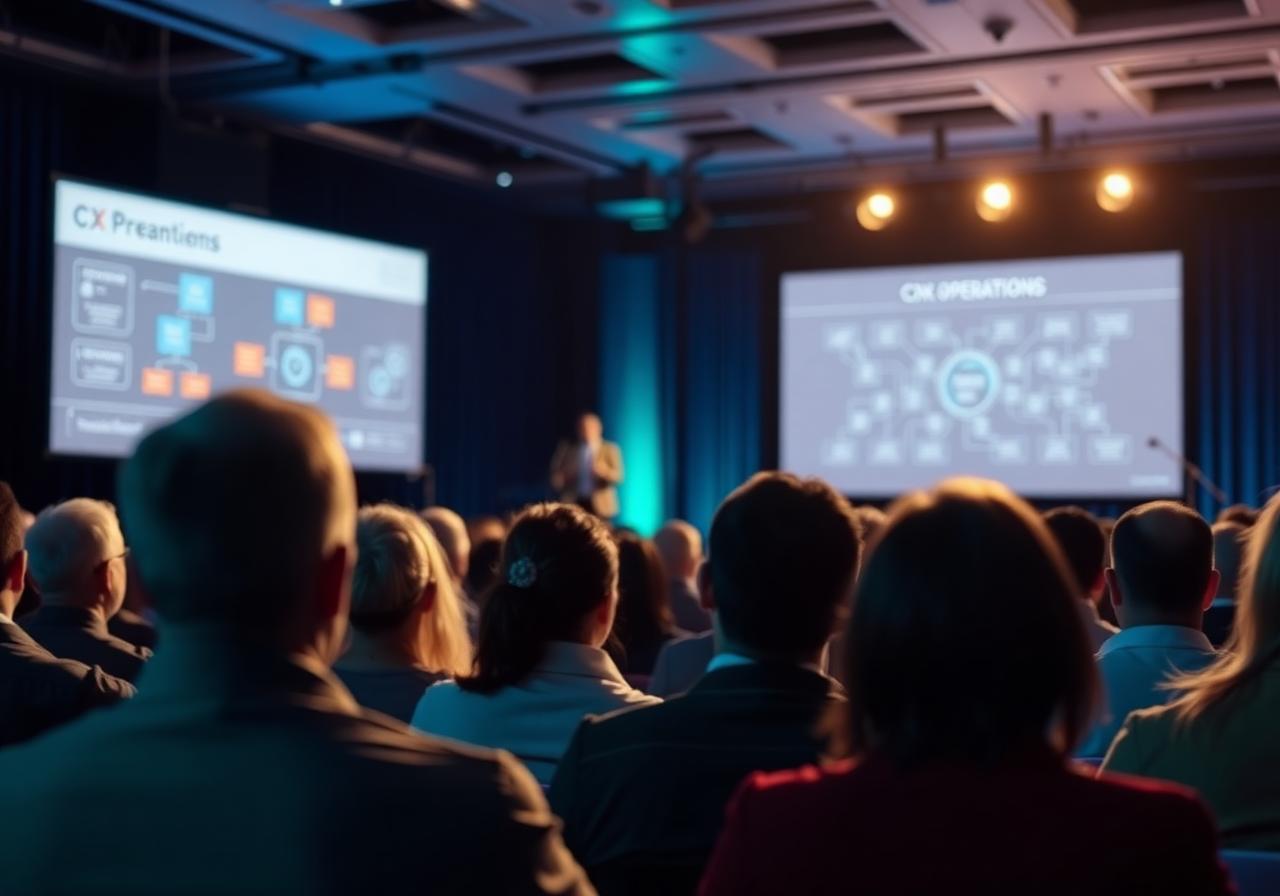
Keynote and panel conversations on AI-powered CX, operational intelligence, and the future of customer operations.

Whiteboard-level work on operational flows, failure demand, and ownership architecture across the customer journey.

Side-by-side with operators and senior leaders — pressure-testing frameworks against real organizational complexity.
Where I work alongside leadership teams.
AI-powered workforce transformation
Operating-model design for organizations integrating AI agents and automation into workforce planning.
Competitive intelligence leadership
Standing up and scaling CI programs that tie market signal directly to product, GTM, and revenue decisions.
Operational strategy consultation
Diagnosing failure demand and rebuilding workforce economics around outcomes — not volume × AHT.
GTM positioning workshops
Repositioning category narratives so messaging connects buyer pain to measurable business results.
Strategic lessons earned in the operation — not borrowed from a playbook.
Every framework, transformation, and contrarian position on this site comes from frontline operational experience — watching what actually happens when AI, workforce, and customer experience meet real organizations.
The dashboard said everything was green.
I watched a contact center operation celebrate 'good service level' while repeat contacts climbed 23% and overtime hit 3,677 hours in a single quarter. The metrics were lying. That's when I started designing around outcomes, not dashboards.
The escalation that changed how I think about ownership.
A frontline agent escalated the same issue four times in one day. Each handoff had its own KPI. None of them tracked the fact that the customer was still unresolved. The Ownership Gap Model™ was born from moments like that.
When overtime became the cost of misalignment.
I saw workforce teams optimizing for schedule adherence while operations burned through overtime trying to cover demand they'd never actually forecasted. The WFM wasn't broken — the operating model was.
ICD-10 didn't just change codes. It exposed failure demand.
During the ICD-10 transition, contact volume didn't rise because patients got sicker. It rose because the system created work it should never have needed. Healthcare taught me that operational complexity isn't a staffing problem — it's a design problem.
A $2M WEM implementation with zero outcome accountability.
I watched a company invest millions in workforce technology, only to realize six months later that quality, performance, and workforce teams were still optimizing for three different scorecards. Tools don't transform operations. Ownership does.
What agents taught me that no dashboard ever did.
I spent hours listening to agents explain why customers called back. None of the reasons showed up in reporting. That gap — between frontline reality and executive visibility — is the single most expensive blind spot in customer operations.
From the floor to the operating model.
Learned operational reality from the frontline — where dashboards stop and customer experience actually happens.
Built operating models that eliminated thousands of overtime hours and rebuilt service levels at scale.
Repositioned categories around outcomes — driving 179% WFM revenue growth and scaling CI from <10 to ~200 competitors.
Connecting AI, workforce, and GTM into a single accountable system for measurable customer-experience outcomes.
- 01On the phonesHealthcare contact centers
Learned operational reality from the frontline — where dashboards stop and customer experience actually happens.
- 02Workforce ManagementForecasting · Scheduling · Operations
Built operating models that eliminated thousands of overtime hours and rebuilt service levels at scale.
- 03Product Marketing & CIAspect · Playvox · CCaaS / WEM
Repositioned categories around outcomes — driving 179% WFM revenue growth and scaling CI from <10 to ~200 competitors.
- 04AI-Powered CX LeadershipOwnership Gap Model™ · Operating-model design
Connecting AI, workforce, and GTM into a single accountable system for measurable customer-experience outcomes.
Published Work & Industry Contributions
Donna is the author of two books — The Ownership Gap™ and When AI Does the Work, Who Owns the Outcome? — and has contributed published work on workforce management, WEM, digital customer experience, operational governance, and AI through industry platforms including Aspect, Playvox, NICE, Call Centre Helper, and the Society of Workforce Planning Professionals (SWPP), along with webinars, panel participation, and authored customer stories.
Explore Published WorkWhat it's like to work with Donna
Donna's impact is best described by the people who have worked alongside her, managed her, and relied on her expertise.
Six recommendations from managers, peers, cross-functional partners, and former team members.
Donna is one of the most knowledgeable workforce management professionals I have ever worked with.
She is someone that is my right hand in product marketing and I feel very confident enlisting her help in projects.
She consistently translates complex data into clear, actionable insights, and also understands how those insights need to land with product, marketing, and operations teams to actually drive action.
She's an incredible team player who is always willing to roll up her sleeves, jump in, and get the job done—all with a smile and can-do attitude.
She is organized, reliable, and detailed in her approach. She's a tremendous cultural fit, earning the respect of all by effectively working across departments.
Donna is an outstanding professional who brings reliability, expertise, teamwork, adaptability, and a forward-thinking approach to everything she does.
She has a wealth of knowledge of all things WFM, as well as many years of analytics. Her leadership skills are excellent.
What people consistently say about Donna
Recurring themes across the recommendations above — not independent awards or rankings.
Translates complex data into actionable insights.
Builds trusted partnerships across sales, product, marketing, and operations.
Brings deep knowledge of WFM, contact center operations, WEM/WFO, and analytics.
Known for producing high-quality work, meeting deadlines, and following through.
Combines hands-on execution, adaptability, knowledge sharing, and strong leadership.
Recommendations provided on LinkedIn. Read them in full on Donna's LinkedIn profile ↗.
Want the full picture of measurable impact?
Professional Biography
Donna Lightfoot is a Product Marketing, Competitive Intelligence, Workforce Strategy, and Operational Transformation leader with more than 15 years of experience helping organizations improve customer experience, workforce effectiveness, operational efficiency, and business outcomes.
Her career spans leadership roles with NICE/Playvox, Aspect/Alvaria, Humana, Walmart, Aetna (CVS Health), Blue Cross Blue Shield, and Group Elite Communications.
Donna is the creator and author of The Ownership Gap™, a framework developed from years of observing organizations optimize activities, departments, and metrics while nobody owned the actual outcome.
Areas of Expertise
- ›Organizational Accountability
- ›The Ownership Gap™ Framework
- ›AI Adoption & Transformation
- ›Workforce Strategy
- ›Workforce Management
- ›Contact Center Operations
- ›Customer Experience
- ›Product Marketing
- ›Competitive Intelligence
- ›Healthcare Operations
- ›Prior Authorization Innovation
- ›Operational Transformation
- ›Go-to-Market Strategy
Career Highlights
- ›NICE / Playvox
- ›Aspect / Alvaria
- ›Humana
- ›Walmart
- ›Aetna (CVS Health)
- ›Blue Cross Blue Shield
- ›Group Elite Communications
See Results & Impact for measurable outcomes across these engagements.
Work With Donna
Strategy advisory, executive workshops, keynote speaking, and assessment-driven consulting on enterprise execution, AI adoption, workforce strategy, and operational transformation.